
T
Loading…
Loading…
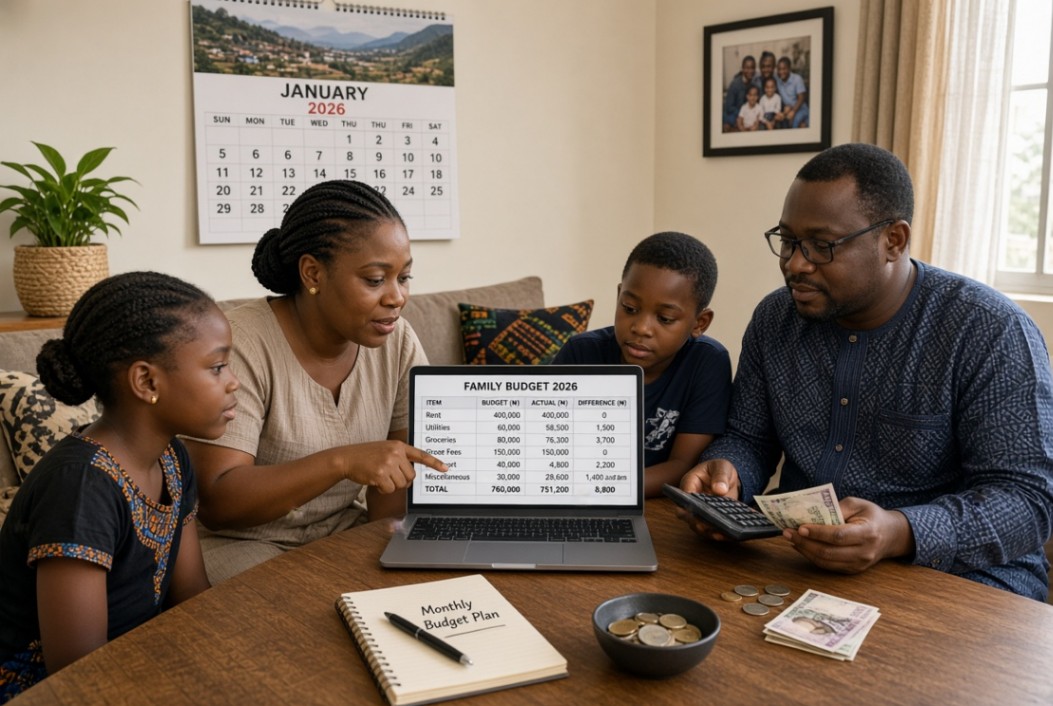
Creating a household budget in Nigeria can feel difficult when food, transport, rent, school expenses, electricity, healthcare, and clothing costs change frequently. A useful family budget does not require a high income; it requires a clear record of what comes in, what goes out, and which expenses need attention first. Recent National Bureau of Statistics data shows why flexible planning matters: Nigeria’s headline inflation rate was reported at 15.39% in August 2026, while food inflation remained higher at 19.57% year on year. Prices were still rising, even though the rate of increase had slowed.
A household budget works better when it begins with money actually received rather than an estimated salary. Include wages, business income, freelance payments, allowances, seasonal earnings, and reliable support from family members. For irregular income, calculate a conservative monthly figure using recent earnings. For example, if a small business earns ₦180,000 one month, ₦230,000 the next, and ₦150,000 after that, a planning figure of ₦150,000 may reduce the risk of committing to expenses that cannot be sustained.
Create a simple list:
Do not count uncertain income as guaranteed money. Record it separately and allocate it only after payment arrives.
Before changing spending habits, track household expenses for one month. Use a notebook, spreadsheet, phone notes, or a budgeting app. Record the amount, date, payment method, and category. Small transactions can become significant when repeated. A daily ₦1,500 transport or snack expense amounts to about ₦45,000 over 30 days, before considering other purchases.
| Category | Examples | Tracking question |
|---|---|---|
| Housing | Rent, service charges, repairs | Is the payment monthly or annual? |
| Food | Grains, protein, vegetables, cooking fuel | Which items fluctuate most? |
| Transport | Bus, fuel, ride-hailing, school transport | Which routes cost the most? |
How Far Can ₦5,000 Really Go at a Thrift Market?
10 Thrift Finds Under ₦2,000 You Need to See
How to Recreate a Celebrity Look With Thrift Pieces
Thrift Date Night Outfits That Don’t Look Cheap
Thrift Outfit Ideas for Campus: Stylish School Looks on a Budget
Thrifted Street Style: Outfits Spotted on Lagos Streets
Have something to give away or sell?
Post your first listing — it only takes a couple of minutes. Or browse listings near you.
| Education | Fees, books, uniforms, lessons | What is due this term? |
| Utilities | Electricity, water, internet, phone credit | Which bills recur automatically? |
| Health | Medicines, consultations, health plans | Which costs are predictable? |
| Clothing | Workwear, children’s clothes, shoes | Can existing items be repaired or exchanged? |
| Family support | Contributions and transfers | Is the amount planned or reactive? |
| Savings | Emergency funds and goals | Is it transferred before discretionary spending? |
| Personal spending | Entertainment, eating out, beauty | What limit is realistic? |
The purpose is not to eliminate every enjoyable expense. It is to reveal patterns so that decisions are based on evidence rather than memory.
A rigid percentage formula may not suit every Nigerian household because rent, school fees, family obligations, and income patterns differ. Instead, divide expenses into four practical groups:
A ₦250,000 monthly household income could be organised like this:
| Budget area | Example allocation | Amount |
|---|---|---|
| Essential fixed costs | 35% | ₦87,500 |
| Essential variable costs | 35% | ₦87,500 |
| Planned irregular costs | 10% | ₦25,000 |
| Savings or reserve | 10% | ₦25,000 |
| Flexible spending | 10% | ₦25,000 |
| Total | 100% | ₦250,000 |
These figures are an illustration, not a universal formula. A household with high rent may allocate more to housing, while a family with school fees due that month may temporarily reduce flexible spending.
Food is often one of the most difficult expenses to control because prices and household needs change. A practical approach is to plan meals around foods already available locally and compare the cost of cooking at home with frequent small purchases outside the home.
A weekly food envelope can make spending visible. For example, a household allocating ₦70,000 monthly to food could divide it into four weekly amounts, while keeping a small portion for price changes or an extra shopping week.
Transport expenses can rise quickly in Lagos and other Nigerian cities because of distance, traffic, fuel prices, and changing fares. Track transport by route rather than recording one broad monthly estimate.
Many budgets fail because they include monthly bills but ignore expenses that occur once or twice a year. Divide an annual cost by 12 to create a monthly planning amount.
Clothing is an area where families can reduce waste and manage costs without treating appearance as unimportant. Start with an inventory of what each person owns, including schoolwear, workwear, occasionwear, shoes, bags, and accessories. Nigeria’s circular-fashion discussions also highlight a serious waste problem: low-quality imported secondhand clothing can end up in landfills, be burned, or enter waterways when it cannot be reused. This makes condition checking important. A cheap item that needs extensive repairs may cost more than a durable item with a higher initial price.
The Federal Competition & Consumer Protection Commission advises e-commerce businesses to provide clear product, price, promotion, and payment disclosures before payment, as well as an accessible complaint process. The FCCPC also operates under the Federal Competition and Consumer Protection Act 2018 and accepts complaints with transaction evidence and details of the amount involved and expected redress.
For Threddo listings, the platform’s Safety Guide can sit alongside these general precautions. Threddo is a free, WhatsApp-first marketplace where buyers and sellers communicate directly, so users still need to verify items, agree on meeting arrangements, and make payment decisions carefully.
Prices, income, and household needs can change within days. A weekly review of 10–15 minutes is often more useful than creating a detailed budget and ignoring it for the rest of the month.
Effective budgeting tips for Nigerian families in 2026 focus on recording real income, tracking spending, planning irregular bills, managing food and transport costs, reducing clothing waste, and protecting transactions from fraud. A flexible household budget can include secondhand clothing and accessories where condition, fit, hygiene, and total cost have been checked carefully. This article is for educational purposes only and does not constitute professional advice. Always follow safe trading practices and use your own judgement.
Last Updated: October 2026