
T
Loading…
Loading…
Last Updated: October 2026
Moving houses is easier when fewer items need to be packed, transported, cleaned, stored, or unpacked. Learning how to declutter before moving can reduce physical work, prevent forgotten items, and give usable clothes, shoes, bags, furniture, and accessories a second life.
In Nigeria, decluttering may involve more than throwing things away. You may need to separate items for relocation, donation, repair, resale, recycling, or safe disposal. This guide explains how to declutter before moving houses using a simple room-by-room method that works for rented apartments, family homes, hostels, and shared accommodation.
Decluttering and packing are different tasks. Packing places items into boxes, while decluttering decides what deserves space in the new home.
Beginning early creates time to inspect items properly. It also reduces rushed decisions on moving day, when damaged clothing, old documents, broken appliances, and unwanted household goods can easily be packed together.
| Time before moving | Main task |
|---|---|
| 4–6 weeks | Sort rarely used items, seasonal clothing, spare kitchenware, and storage boxes |
| 2–4 weeks | Photograph items for resale or donation and arrange repairs |
| 1–2 weeks | Declutter everyday clothing, toiletries, books, shoes, and small appliances |
| 2–3 days | Remove rubbish, pack essentials separately, and confirm collections |
| Moving day | Check cupboards, balconies, wardrobes, drawers, and outdoor spaces |
If the moving date is uncertain, start with items that have not been used for several months. This keeps everyday belongings available while creating an early reduction in volume.
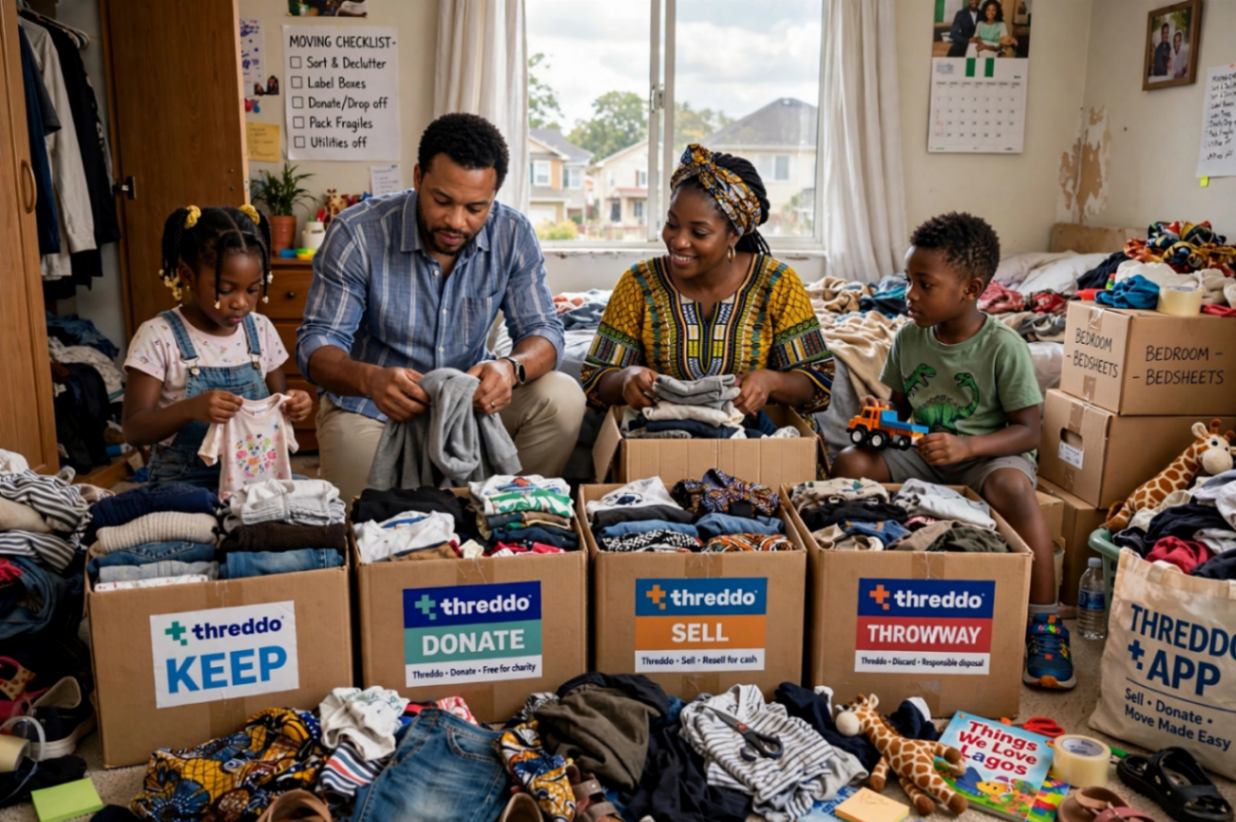
A five-category system keeps decisions consistent. Prepare labelled bags, cartons, or corners for each group:
How Far Can ₦5,000 Really Go at a Thrift Market?
10 Thrift Finds Under ₦2,000 You Need to See
How to Recreate a Celebrity Look With Thrift Pieces
Thrift Date Night Outfits That Don’t Look Cheap
Thrift Outfit Ideas for Campus: Stylish School Looks on a Budget
Thrifted Street Style: Outfits Spotted on Lagos Streets
Have something to give away or sell?
Post your first listing — it only takes a couple of minutes. Or browse listings near you.
Avoid creating a large “decide later” pile. If an item needs more thought, place it in a dated box and review it after 48 hours. A short deadline prevents temporary storage from becoming permanent clutter.
Ask:
The aim is not to own as little as possible. The aim is to carry belongings that fit your current life and the space available at the destination.
Clothing can take up a large amount of moving space, especially when items are compressed into bags without inspection. Sort clothes by type first, then by condition.
A garment that has not been worn because of a minor repair can go into the repair category. A garment with extensive damage may be more suitable for cleaning cloth, craft use, or textile collection where available.
| Item condition | Suitable next step |
|---|---|
| Clean and gently used | Sell, donate, or give away |
| Worn but repairable | Repair before deciding |
| Stained or damaged beyond normal use | Repurpose or dispose of responsibly |
| Valuable, sentimental, or ceremonial | Keep and pack separately |
| Duplicate or rarely used | Compare duplicates and retain the useful quantity |
Do not describe clothing as “new” if it has been worn. Accurate descriptions help prevent misunderstandings when items are passed to another person.
Small fashion items are easy to overlook because they fit into drawers and suitcases. They can also become heavy when stored in large quantities.
Pair every shoe and discard or repurpose pairs with severe damage. Clean dust and mud before packing. Place shoes in breathable bags or wrap them separately from clothing to reduce transfer of dirt and odour.
Check handles, shoulder straps, buckles, zips, linings, and interior pockets. Remove old receipts, cosmetics, cards, and papers. A bag with a small repair may still have secondhand value, but the condition should be disclosed clearly.
Group earrings, necklaces, watches, belts, sunglasses, scarves, caps, and hair accessories. Keep valuable or sentimental pieces in a separate labelled pouch rather than placing them in a general moving carton.
Separate wigs, extensions, braids, styling tools, bonnets, and hair accessories. Clean items according to their material and manufacturer instructions. Personal-use hair products and used hairpieces require careful hygiene consideration before giving them to another person.
A room-by-room method is easier than opening every box at once.
Inspect wardrobes, under-bed storage, bedside drawers, laundry baskets, suitcases, and storage trunks. Remove empty packaging, old hangers, duplicate bedding, worn towels, and clothing that no longer fits your routine.
Keep one labelled essentials bag containing clothes, toiletries, medication prescribed to you, chargers, documents, and valuables for the first night.
Check cabinets, drawers, the refrigerator, freezer, pantry, and balcony storage. Group duplicate pots, cracked plates, unused containers, expired packaged foods, and appliances that no longer work.
Do not transport leaking liquids, open food containers, or damaged gas-related equipment without appropriate safety handling. For regulated products or household chemicals, follow the product label and relevant Nigerian safety guidance rather than transferring them casually.
Review curtains, rugs, cushions, electronics, cables, decorations, books, and extra chairs. Test chargers and small electronics before packing. Label cables with the device they belong to, and recycle or separate items that are unusable where suitable services exist.
Dispose of empty containers and separate expired or unsuitable personal-care products. Keep everyday toiletries accessible rather than sealing them in a box that will not be opened immediately.
These spaces often contain broken chairs, old buckets, unused building materials, empty cartons, and appliances awaiting repair. Give each item a final condition check. A “temporary” storage item with no realistic use or repair plan is a strong candidate for removal.
Selling and donating serve different purposes. Selling can help recover part of an item’s value, while donating or giving away can move usable belongings to someone who needs them without a long listing process.
Donation centres and community organisations may have different acceptance rules. Contact the recipient before transporting a large quantity so that usable items do not become an unwanted burden.
The figures below are illustrative starting ranges, not guaranteed market values. Actual prices vary by brand, condition, location, material, demand, and urgency.
| Item | Common condition | Illustrative range |
|---|---|---|
| Everyday tops | Clean, gently used | ₦1,500–₦5,000 |
| Jeans or trousers | Good condition | ₦3,000–₦10,000 |
| Occasion dress | Good condition | ₦5,000–₦25,000 |
| Sneakers | Clean and functional | ₦5,000–₦30,000 |
| Handbag | Good condition | ₦3,000–₦20,000 |
| Books | Good condition | ₦500–₦5,000 |
| Small household item | Functional | ₦1,000–₦15,000 |
Use photos, measurements, brand details, defects, and location information to help a potential buyer assess the item. Avoid presenting an uncertain price as a fixed market value.
A decluttering sale works more efficiently when items are grouped and described clearly.
For clothes, useful measurements may include chest, waist, hip, sleeve, inseam, and total length. For shoes, include the labelled size and, where possible, an internal measurement.
Women’s black handbag, gently used, ₦7,000. Zip and lining are functional. Minor surface marks near the handle, shown in the photos. Pickup around Yaba, Lagos.
This description gives a potential buyer enough information to decide whether to ask further questions.
Moving creates time pressure, and scammers may take advantage of urgency. Safe trading practices remain important even when an item is inexpensive.
The Federal Competition and Consumer Protection Act, 2018 established Nigeria’s federal consumer-protection framework, including protections connected with fair treatment and misleading representations. It does not remove the need for ordinary caution in private secondhand exchanges, so accurate descriptions and written agreements remain useful.
For a marketplace transaction, check the platform’s safety guidance and retain relevant messages until the exchange is complete. If a problem involves suspected fraud, harassment, or theft, preserve evidence and contact the appropriate authorities or service provider.
Decluttering can create waste if every unwanted item goes into one bin. Separate items by material and condition before moving day.
Secondhand circulation can extend the useful life of products, but it is not automatically sustainable. A good process keeps usable items in use, avoids unnecessary transport, and sends genuinely unusable materials toward appropriate disposal or recycling routes.
The first night in a new home is easier when essential items are not buried in a large load.
Pack a clearly marked bag or carton containing:
Keep valuables and important documents with you rather than placing them in an unmarked moving load.
When time is limited, use short timed sessions.
A 30-minute session repeated across several days can be more manageable than attempting the entire house in one weekend.
When clean clothes, shoes, bags, jewellery, hair, or accessories are still usable, Threddo can provide a Nigeria-focused place to list them for sale or donation through direct buyer-seller contact. Review the platform’s Safety Guide, avoid sharing sensitive account information, and agree on collection details clearly.
Decluttering before moving houses works best when you begin early, sort belongings by condition and purpose, and separate moving items from resale, donation, repair, and disposal items. A room-by-room checklist can help reduce moving volume while keeping usable fashion and household goods in circulation across Nigeria.
Accurate descriptions, realistic prices in naira, clean items, and cautious meeting arrangements support safer secondhand trading. Decluttering is also an opportunity to reduce avoidable waste by reusing cartons, donating functional items, and handling damaged electronics or chemicals separately.
This article is for educational purposes only and does not constitute professional advice. Always follow safe trading practices and use your own judgement.