
T
Loading…
Loading…
Last Updated: October 2026
Selling preloved items online in Nigeria works best when the listing is clear, the photos are honest, and the buyer can contact you quickly. Threddo is built around that idea: a WhatsApp-first marketplace where people can sell or give away secondhand clothes, shoes, bags, jewellery, hair, and accessories without platform fees or in-app payments.
For many Nigerians, especially in Lagos and other high-cost cities, secondhand fashion is now part of everyday shopping, not a hidden backup option. Reports on thrift culture in Nigeria show that affordability, sustainability, and style discovery are major reasons people buy pre-owned fashion, while circular economy research continues to show that resale and reuse reduce textile waste when items stay in circulation longer.
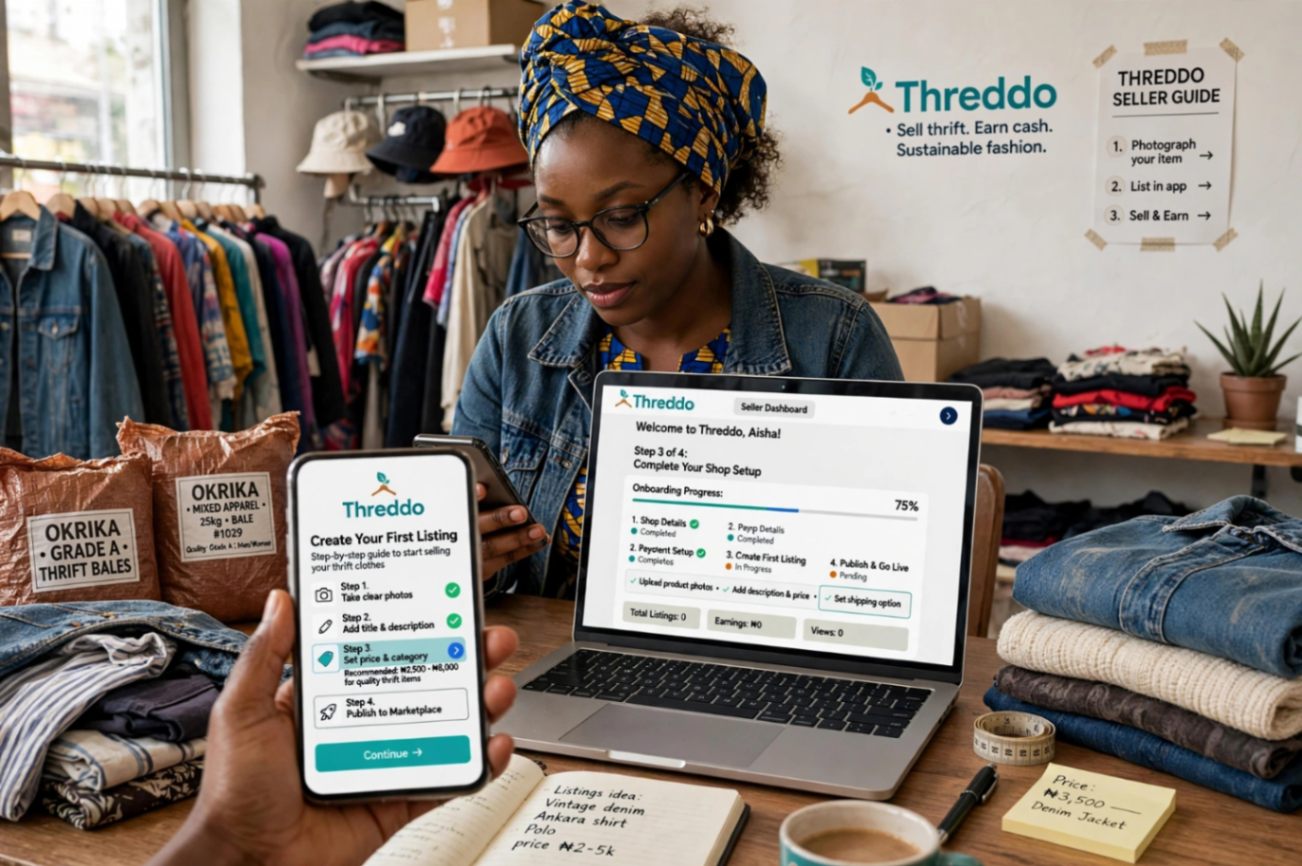
Threddo is designed for simple peer-to-peer trading, so the selling process is lighter than on many marketplaces. You list an item, set a price or donation option, and let interested buyers contact you directly on WhatsApp. That direct-contact model suits people who want fewer steps, faster conversations, and no platform payment flow.
The platform also fits the way many Nigerians already shop online: fast chat, quick questions, and informal negotiation. In practice, that means your listing needs to answer the buyer’s first questions before they even message you, because clarity increases trust.
The strongest listings are usually items that are clean, photographed clearly, and easy to describe. On a marketplace like Threddo, the categories are broad, so sellers can list clothing, shoes, bags, jewellery, hair, accessories, and other fashion-related items in one place.
A practical way to think about sale-ready items is this:
If an item has visible wear, that is not a problem by itself; the useful part is disclosing the condition clearly. Transparent listings tend to reduce back-and-forth and help buyers feel safe enough to continue the conversation.
How Far Can ₦5,000 Really Go at a Thrift Market?
10 Thrift Finds Under ₦2,000 You Need to See
How to Recreate a Celebrity Look With Thrift Pieces
Thrift Date Night Outfits That Don’t Look Cheap
Thrift Outfit Ideas for Campus: Stylish School Looks on a Budget
Thrifted Street Style: Outfits Spotted on Lagos Streets
Have something to give away or sell?
Post your first listing — it only takes a couple of minutes. Or browse listings near you.
The easiest way to start is to prepare the item like a buyer would receive it. Clean the piece, remove lint, check zips and buttons, and confirm whether anything is missing. That small preparation often improves how the item looks in photos and in chat.
A simple listing prep checklist works well:
If you list donation items, say so plainly. Threddo includes a Donations filter, so making that clear helps match the item to the right audience.
Pricing on secondhand fashion usually depends on condition, demand, brand recognition, and how quickly you want attention. In Nigeria, lower-cost resale is a major reason thrift shopping has grown, especially during periods of high living costs and inflation.
A simple pricing guide can help:
| Item type | Common beginner range | Notes |
|---|---|---|
| T-shirt | ₦1,500–₦5,000 | Depends on brand, fabric, and condition |
| Dress | ₦3,000–₦15,000 | Occasion wear often sits higher |
| Jeans | ₦4,000–₦12,000 | Size and fit matter |
| Sneakers | ₦5,000–₦25,000 | Original box and condition can help |
| Handbag | ₦4,000–₦30,000 | Brand and wear matter a lot |
| Wig or hair item | ₦5,000–₦50,000+ | Length, quality, and fullness drive price |
These are practical starting ranges, not fixed market rules. A good approach is to compare similar items in local thrift markets and online resale spaces, then position your price according to condition and urgency.
Photos often decide whether a buyer opens the chat. One clear image is not enough; a buyer wants proof of condition, shape, size, and details. That is why multiple angles work better than filters or edited pictures.
Use this photo set:
Natural light usually gives the most accurate colour. Avoid heavy editing because colour mismatch often creates disputes later. A truthful image can still look attractive when the item is presented neatly.
Your listing title and description do most of the persuasion work. Keep the title short, specific, and searchable, for example: “Zara midi dress, UK 12, gently used” or “Black Nike sneakers, size 42, good condition.”
A strong description usually includes:
Try to write in plain language. In secondhand trade, clarity matters more than fancy wording because buyers want to know what they are getting. That matches the trust-first style of peer-to-peer fashion trading in Nigeria and across Africa.
Trust is one of the most important parts of online resale, especially when a platform connects strangers directly. Nigeria’s consumer protection framework encourages fair dealing and protection against misleading claims, and the Federal Competition and Consumer Protection Commission provides guidance on consumer rights and complaint handling through its official channels.
A safe selling routine can include:
Fraud prevention is mostly about slowing the process down enough to verify what is happening. If a buyer seems rushed or avoids basic questions, that is often a sign to pause and recheck the conversation. Threddo’s safety-first approach is designed around practical caution, direct communication, and user judgement.
When a transaction goes wrong, the main idea is to keep records of the conversation, item details, and payment trail. The FCCPC has public consumer guidance, and that matters because clear communication and honest description help reduce disputes before they start.
In practical terms, this means your listing should match the item’s real condition, size, and colour as closely as possible. If you say a bag is “gently used,” the item should visibly fit that description. Consumer trust in online trading rises when product descriptions are truthful and easy to verify.
Most new sellers lose momentum for simple reasons, not because the market is weak. The most common mistakes are unclear photos, vague prices, slow replies, and descriptions that omit visible defects.
A quick comparison helps:
| Better practice | Weak practice |
|---|---|
| Clear daylight photos | Dark or blurry photos |
| Exact size and condition | “Fits medium people” |
| Honest flaw disclosure | Hiding tears or stains |
| One clear price | “Ask me” with no guidance |
| Fast WhatsApp replies | Long delays after interest |
Small fixes in these five areas can noticeably improve response quality. In Nigerian resale culture, speed and clarity often matter as much as the item itself because many buyers are comparing several options at once.
Here is a simple template you can reuse:
Title: Cream satin dress, UK 10, gently used
Description: Worn once, clean condition, no stains, no tears, zip works well, ideal for events. Colour is cream, fabric has a soft satin finish, and the item comes from a smoke-free home. Contact on WhatsApp for more photos or measurement details.
Price: ₦8,000
Status: For sale
This format works because it answers the buyer’s main questions immediately. It also reduces repeated messages asking for the same details.
Secondhand selling in Nigeria is not only about clearing space; it is part of a larger shift toward circular fashion and more resourceful consumption. Research on Africa’s secondhand clothing market shows that reuse is tied to both affordability and environmental concerns, while also sitting inside a bigger debate about waste, trade, and local production.
That context matters because every well-described resale item extends the useful life of clothing and accessories already in circulation. For a student, side hustler, or wardrobe declutterer, that means your listing can serve both a practical need and a sustainability goal.
Use this before publishing your first listing:
This checklist keeps the process simple enough for a first-time seller while still meeting the trust expectations that Nigerian buyers have on peer-to-peer platforms.
If you want a simple place to apply these steps, Threddo’s category structure and direct WhatsApp contact make it easy to turn one clean listing into a real conversation, especially when you use honest photos and clear item details.
For added safety, it also helps to keep your own rules consistent across listings and to review Threddo’s safety guidance before meeting buyers or arranging pickups.
Starting to sell on Threddo works best when you treat each listing like a mini product page: clean item, accurate photos, clear details, and fast communication. That approach matches how Nigerians already buy thrift, how trust works in chat-based marketplaces, and how secondhand fashion supports more circular use of clothing and accessories.
This article is for educational purposes only and does not constitute professional advice. Always follow safe trading practices and use your own judgement.