
T
Loading…
Loading…
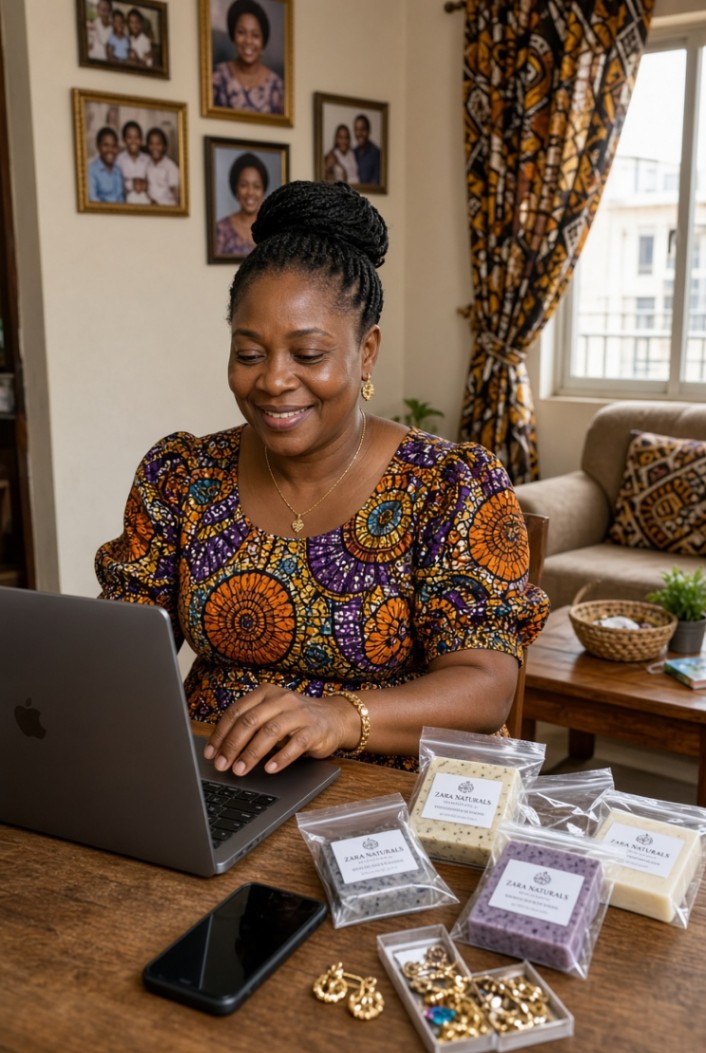
For many women in Nigeria, earning from home involves balancing childcare, cooking, household responsibilities, limited space, and an unpredictable schedule. One practical option is to turn unused household items, clothing, shoes, bags, hair, and accessories into products that can be sold or exchanged.
Secondhand fashion is particularly suitable for home-based selling because stock can begin with items already in the wardrobe. Nigeria’s thrift trade, often called “okrika” or “bend-down-select”, serves shoppers looking for affordable clothing and accessories, while resale allows usable items to remain in circulation instead of becoming waste. Nigerian thrift markets have also grown as consumers look for lower-cost fashion during periods of economic pressure.
This guide explains how housewives can make money from home in Nigeria through realistic, flexible activities. It covers what to sell, how to price items in naira, how to use WhatsApp, how to avoid common scams, and how to build trust with buyers.
A home-based business does not always begin with buying stock. A useful first step is to inspect clothes, shoes, bags, jewellery, wigs, children’s items, and accessories that are no longer being used.
Create three groups:
A wardrobe audit can reveal clothing purchased for a special occasion, children’s clothes that no longer fit, bags kept in storage, or shoes that are rarely worn. Selling these items creates space while testing whether there is local demand.
| Item | Condition | Possible buyer | Preparation | Example price |
|---|---|---|---|---|
| Women’s blouse | Gently used | Office worker or student | Wash, iron, photograph | ₦3,000–₦7,000 |
| Children’s dress | Good condition | Parent | Check stains and sizing | ₦2,000–₦5,000 |
| Handbag | Very good | Student or worker | Wipe, inspect zip | ₦4,000–₦12,000 |
| Flat shoes |
How Far Can ₦5,000 Really Go at a Thrift Market?
10 Thrift Finds Under ₦2,000 You Need to See
How to Recreate a Celebrity Look With Thrift Pieces
Thrift Date Night Outfits That Don’t Look Cheap
Thrift Outfit Ideas for Campus: Stylish School Looks on a Budget
Thrifted Street Style: Outfits Spotted on Lagos Streets
Have something to give away or sell?
Post your first listing — it only takes a couple of minutes. Or browse listings near you.
| Lightly used |
| Adult woman |
| Clean soles, show size |
| ₦3,000–₦8,000 |
| Costume jewellery | New or lightly used | Fashion buyer | Package separately | ₦1,000–₦4,000 |
These figures are examples for planning rather than fixed market prices. Location, brand, condition, material, demand, and presentation can change the final amount.
Selling clothes from home is one of the simplest ways to test secondhand commerce. Useful categories include:
Descriptions need to be accurate. Include the size on the label, approximate measurements where possible, colour, fabric, condition, and any flaw. A buyer who receives an honest description is more likely to trust future listings.
For example:
“Blue women’s dress, labelled size 14, worn twice, no tears, zip works properly, slight fading near the hem. Suitable for a casual outing. ₦6,000.”
This is more useful than writing only “fine dress for sale”.
Shoes and bags can be easier to store than large clothing bundles. Before listing them, check:
Photos of the sole and interior help buyers assess condition. For bags, include a picture showing the approximate size beside a common object, such as a notebook or water bottle.
Children outgrow clothes quickly, so parents often look for affordable bundles. Instead of listing ten items individually, group pieces by size or age range.
Examples include:
The bundle description should state the number of pieces, sizes, condition, and any item with a visible defect. Mixing different sizes without clear labelling can lead to disputes.
A small resale activity can involve sourcing a few items from local markets, wholesalers, family members, or people clearing their wardrobes. The process is:
A simple pricing calculation is:
$ ext{Selling price} = ext{Item cost} + ext{Preparation cost} + ext{Transport allocation} + ext{Desired margin} $
For example, if a blouse costs ₦2,500, cleaning and packaging cost ₦300, and transport allocation is ₦200, the total cost is ₦3,000. A listed price of ₦4,000 gives a gross difference of ₦1,000 before other expenses.
This is not a guarantee of profit. Unsold stock, damaged items, delivery costs, discounts, and time spent handling enquiries all affect the result.
WhatsApp is widely used for personal communication and small-scale selling in Nigeria. A home seller can organise products using:
A product status can follow this format:
Women’s black handbag – ₦8,000
Clean interior, working zip, lightly used.
Pickup: Ikeja. Delivery available at buyer’s cost.
Send “Bag 04” to enquire.
Avoid sending repeated promotional messages to people who have not requested them. A smaller audience that trusts the seller can be more useful than a large list of uninterested contacts.
Good photographs do not require an expensive camera. Use:
Photographs should not hide defects. A visible flaw can reduce the risk of disagreement after purchase.
Home selling can become disorganised when items are stored in different rooms or customer messages are mixed together. A basic routine can include:
| Activity | Suggested task |
|---|---|
| Stock check | Count available items once or twice weekly |
| Photography | Photograph several items in one session |
| Listing | Post new items at an agreed time |
| Enquiries | Reply during two or three scheduled periods |
| Packing | Keep clean packaging materials together |
| Records | Note buyer, item, price, status, and delivery |
| Review | Remove sold listings promptly |
A notebook or spreadsheet can record:
These records help distinguish revenue from profit. Money received from a buyer is not automatically profit if stock, transport, packaging, or repairs have not been deducted.
Pricing secondhand fashion requires a balance between condition, demand, original cost, and local affordability. A buyer may not value an item according to its original retail price if it has been worn or is no longer fashionable.
A price range can be displayed openly:
| Product type | Example home-selling range |
|---|---|
| Basic tops | ₦2,000–₦6,000 |
| Jeans and trousers | ₦4,000–₦12,000 |
| Occasion dresses | ₦6,000–₦25,000 |
| Children’s clothing bundles | ₦5,000–₦15,000 |
| Casual shoes | ₦3,000–₦12,000 |
| Everyday handbags | ₦4,000–₦15,000 |
| Costume jewellery | ₦1,000–₦5,000 |
| Used wigs or hairpieces | Varies substantially by type and condition |
These are planning examples, not official market rates. Prices differ across Lagos, Abuja, Port Harcourt, Ibadan, Kano, Enugu, and other locations.
Direct buyer-seller contact can make transactions convenient, but it also requires care. Common warning signs include pressure to act immediately, requests for unnecessary banking information, fake payment screenshots, overpayment stories, and links claiming to be delivery or payment portals.
Nigeria’s Federal Competition and Consumer Protection Act provides a general framework for consumer protection and fair commercial practices. It does not remove the need for sellers and buyers to communicate clearly about condition, price, delivery, refunds, and defects. For specific disputes or legal questions, professional advice may be required.
Secondhand items are not automatically defective because they have been used, but their condition needs to be represented honestly. A listing can state:
Avoid wording such as “perfect condition” when an item has stains, missing buttons, peeling, stretched fabric, or a damaged zip. Clear descriptions protect both sides and support fair expectations.
Housewives can also create small service-based activities connected to fashion without holding much inventory. Examples include:
For commission selling, write down the agreed percentage or fixed fee before listing the item. Also agree on the minimum acceptable price, who handles delivery, and when the owner receives payment.
Reselling and exchanging clothing can extend the useful life of garments. Research on international secondhand clothing trade also shows that resale is not automatically environmentally beneficial; transport, overconsumption, poor-quality garments, and disposal practices still matter.
Practical circular-fashion habits include:
Sustainability in a Nigerian home business is often practical: extending use, reducing unnecessary purchases, and ensuring that unwanted items have a clear next destination.
Gather unused clothes, shoes, bags, hair, and accessories. Separate saleable items from donations and repairs.
Wash, air, iron, clean, or repair items where appropriate. Record visible defects.
Compare similar local listings and create realistic prices in naira. Decide whether to sell individually or in bundles.
Take clear photographs in daylight. Assign each item a code such as DRESS01 or BAG03.
Post a small number of well-described items on WhatsApp Status or a suitable marketplace.
Answer questions about size, condition, location, price, and delivery. Keep confirmed and pending orders separate.
Record enquiries, completed sales, objections, and unsold items. Adjust photographs or descriptions before changing prices.
Threddo is a WhatsApp-first Nigerian marketplace where people can list secondhand clothing, shoes, bags, jewellery, hair, and accessories without listing fees. Sellers can also review the platform’s Safety Guide and browse existing listings for examples of clear item descriptions.
Housewives can make money from home in Nigeria by starting with unused household items, selling secondhand fashion, creating clothing bundles, reselling carefully selected stock, or helping others organise and market their items. The practical foundation is clear descriptions, accurate pricing, organised records, reliable communication, and safety-conscious transactions.
Secondhand selling can also support a more circular use of clothing by helping garments, shoes, bags, hair, and accessories reach new owners. The activity can begin at a small scale, with the seller learning from actual enquiries and completed transactions rather than purchasing large amounts of stock immediately.
This article is for educational purposes only and does not constitute professional advice. Always follow safe trading practices and use your own judgement.