
T
Loading…
Loading…
Last Updated: October 2026
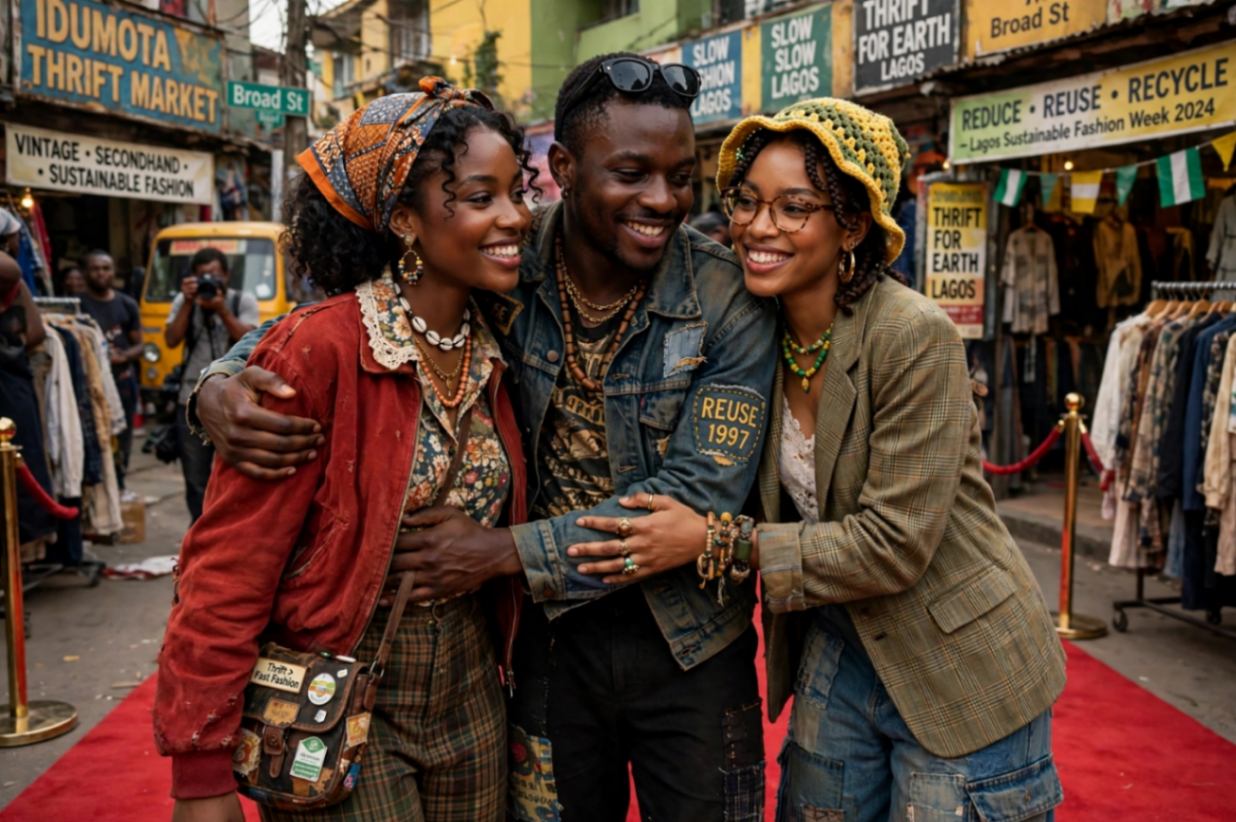
Thrift fashion in Nigeria has moved beyond a quiet way to find affordable clothes. In Lagos, secondhand markets and online sellers now offer vintage denim, blazers, dresses, handbags, shoes, jewellery and statement pieces that can become part of a highly polished wardrobe.
Nigerian celebrities have helped make this shift more visible. Their public appearances often show that style does not depend entirely on buying newly released clothing. A carefully selected vintage item, a reworked outfit or a previously worn designer piece can appear distinctive when combined with strong tailoring, accessories and confident styling.
This does not mean every celebrity outfit is thrifted. Public photographs rarely prove where an item was purchased or whether it is secondhand. The more reliable observation is that celebrity fashion has helped popularise several ideas associated with thrifting: repeating clothes, mixing price points, reviving older silhouettes and treating personal styling as more important than a garment’s original retail status.
Nigeria has a long-standing secondhand clothing culture. In everyday conversation, people commonly use terms such as okrika, bend-down-select, vintage and thrift to describe different forms of pre-owned fashion. The trade supports market sellers, online vendors, tailors, cleaners, repairers, transport workers and other participants in the clothing economy.
Research on secondhand clothing flows in Africa identifies Nigeria as one of the continent’s significant importing countries, while also warning that the environmental benefits of secondhand trade depend on collection, reuse, repair and waste-management systems. This distinction matters: buying a pre-owned item can extend its useful life, but unwanted clothing still creates waste when it cannot be reused or properly handled.
A recent report on Lagos fashion describes the visibility of thrifting in areas such as Yaba and Katangua, where shoppers encounter denim, blazers and other pieces at prices below many new retail alternatives. Online thrift pages and social-media sellers have expanded access beyond physical markets, although buyers still need to verify condition, measurements and seller identity.
How Far Can ₦5,000 Really Go at a Thrift Market?
10 Thrift Finds Under ₦2,000 You Need to See
How to Recreate a Celebrity Look With Thrift Pieces
Thrift Date Night Outfits That Don’t Look Cheap
Thrift Outfit Ideas for Campus: Stylish School Looks on a Budget
Thrifted Street Style: Outfits Spotted on Lagos Streets
Have something to give away or sell?
Post your first listing — it only takes a couple of minutes. Or browse listings near you.
Celebrity fashion influences people through photographs, music videos, red-carpet appearances, interviews, social-media posts and styling campaigns. A celebrity does not need to announce that an outfit is thrifted for the look to influence secondhand fashion. The influence can come from the silhouette, colour combination or styling technique.
For example, when a public figure wears a relaxed oversized blazer with jeans and a simple top, shoppers may begin looking for similar pieces in thrift markets. When an entertainer repeats a jacket, styles one dress in different ways or combines traditional Nigerian clothing with vintage accessories, the message is that a wardrobe can be flexible rather than disposable.
A secondhand jacket can be paired with a newly made shirt, locally tailored trousers or modern sneakers. This approach avoids treating an outfit as a single-brand purchase.
The practical lesson is to assess each item by its condition, fit and styling potential. A thrifted blazer may work with several existing outfits, while a heavily branded piece may have fewer uses.
Public figures sometimes become associated with a particular jacket, hat, boot, handbag or pair of sunglasses. Repetition increases the styling value of an item because the same piece can create different looks when combined with different colours and proportions.
For a shopper, this means checking whether a potential purchase works across multiple occasions before buying it. A black blazer, neutral handbag or durable denim jacket may offer more combinations than a highly specific occasion piece.
Jewellery, belts, scarves, sunglasses and bags can change the appearance of a simple outfit. Secondhand accessories also allow shoppers to explore vintage styles without replacing their whole wardrobe.
A basic white shirt, for instance, can look different with a brooch, waist belt, colourful bag or layered necklace. The accessory does not need to be expensive; its condition, scale and relationship to the outfit matter more.
Wide-leg trousers, structured shoulders, denim jackets, long skirts and patterned shirts often return to fashion conversations. Thrift markets can be useful places to find these shapes because older clothing may reflect different design periods.
Vintage does not automatically mean high quality. Examine seams, fastenings, fabric damage, odour, stains and signs of alteration before treating an item as a valuable find.
Copying a full celebrity outfit can be expensive and may not suit Nigeria’s climate, daily transport, workplace expectations or personal comfort. A more practical method is to identify one element of the look and reinterpret it using available clothing.
| Celebrity-style element | Thrift alternative | Everyday Nigerian styling idea |
|---|---|---|
| Oversized blazer | Pre-owned suit jacket | Wear with jeans, a plain top and loafers |
| Vintage denim | Used denim jacket or jeans | Combine with a cotton shirt and sneakers |
| Statement handbag | Secondhand structured bag | Use with a simple outfit for contrast |
| Layered jewellery | Pre-owned necklaces or bangles | Add one or two pieces to a plain dress |
| Wide-leg trousers | Vintage or gently used trousers | Pair with a fitted top and low shoes |
| Printed shirt | Pre-owned patterned shirt | Wear open over a vest or tucked into trousers |
| Sunglasses | Verified secondhand accessory | Check lenses, hinges and visible damage |
The aim is not to reproduce someone else’s identity. It is to understand how colour, proportion, texture and accessories work together, then adapt those elements to your own wardrobe.
Before paying for a secondhand fashion item, inspect it in good light and ask questions where information is missing.
Secondhand prices vary by location, fabric, condition, label, demand, alteration and seller. The ranges below are planning examples rather than fixed market prices.
| Item | Illustrative range | Factors that affect price |
|---|---|---|
| T-shirt or casual top | ₦2,000–₦8,000 | Fabric, condition, print and fit |
| Jeans or trousers | ₦5,000–₦20,000 | Denim weight, brand, waist size and wear |
| Blazer or suit jacket | ₦8,000–₦35,000 | Tailoring, lining, fabric and condition |
| Dress | ₦5,000–₦30,000 | Construction, occasion, fabric and alterations |
| Secondhand handbag | ₦5,000–₦40,000 | Material, hardware, size and condition |
| Costume jewellery | ₦1,000–₦10,000 | Material, design and visible wear |
| Pre-owned shoes | ₦5,000–₦35,000 | Sole condition, brand, size and repairs |
A low purchase price does not necessarily mean a low total cost. Washing, dry-cleaning, tailoring, repairs and delivery can change the amount spent.
Fashion visibility can encourage wardrobe reuse, but celebrity culture can also encourage rapid consumption if every photographed outfit is treated as something to purchase immediately. A more sustainable approach focuses on extending the life of clothing already available.
The circular-economy value of secondhand fashion comes from keeping products and materials in use for longer through resale, reuse, repair, alteration and responsible disposal. Research on African secondhand clothing cautions that international clothing flows are not automatically circular and can place pressure on local waste systems.
Secondhand fashion is often traded through informal markets, social-media pages, messaging apps and peer-to-peer arrangements. That convenience creates a need for clear communication.
For online transactions, keep a written record of the item description, agreed price, delivery plan and any disclosed defects. Use caution with urgent payment requests, copied photographs, unusually low prices and sellers who refuse reasonable questions.
Nigeria’s Federal Competition and Consumer Protection framework provides the national context for consumer protection and fair market conduct. It does not remove the need for buyers and sellers to check goods carefully, communicate clearly and retain transaction records. For specific disputes or legal questions, use a qualified Nigerian professional or the appropriate official consumer-protection channel rather than relying on a general article.
A simple three-part method helps translate celebrity styling into an affordable wardrobe:
Identify whether the outfit is fitted, oversized, cropped, straight, flowing or layered. Search for that shape rather than searching only for the celebrity’s exact item.
The focal point may be a bright jacket, printed shirt, unusual bag or pair of shoes. Keep the remaining pieces relatively simple so the outfit remains balanced.
Ask whether the item works with at least three pieces already in your wardrobe. For example:
This method reduces impulse purchases and makes styling more intentional.
Celebrity visibility can raise the perceived style value of secondhand clothing, but the industry also depends on people whose work is less visible. Market sellers sort and price garments; tailors adjust them; cleaners prepare them; photographers create listings; dispatch riders move them; and buyers keep them circulating.
The culture also reflects Nigerian creativity. A thrifted item may be combined with Ankara, aso-oke, lace, locally made footwear or custom jewellery. The result is not simply an imitation of foreign fashion; it can become a specifically Nigerian interpretation built around climate, movement, occasion and local craftsmanship.
The most useful lesson from celebrity thrift fashion is therefore not that every fashionable person needs a famous label. It is that styling, fit, maintenance and creativity can give a pre-owned item a new context.
If you are looking for a local place to list or find pre-owned clothing, shoes, bags, jewellery, hair and accessories, Threddo provides a WhatsApp-first marketplace for direct buyer–seller contact. Its safety guidance can be used alongside careful inspection, clear descriptions and sensible transaction habits.
Nigerian celebrity style has helped make thrift fashion more visible by showing the appeal of vintage silhouettes, repeated outfits, mixed price points and expressive accessories. For everyday shoppers, the practical opportunity lies in adapting one styling idea at a time, checking garment condition, budgeting for cleaning or repairs and keeping clothing in use for longer.
Celebrity influence is most useful when it encourages creativity rather than unnecessary consumption. A secondhand blazer, bag, pair of shoes or piece of jewellery can become part of a polished wardrobe when its condition, fit and styling potential are assessed carefully.
This article is for educational purposes only and does not constitute professional advice. Always follow safe trading practices and use your own judgement.