
T
Loading…
Loading…
Last Updated: September 2026
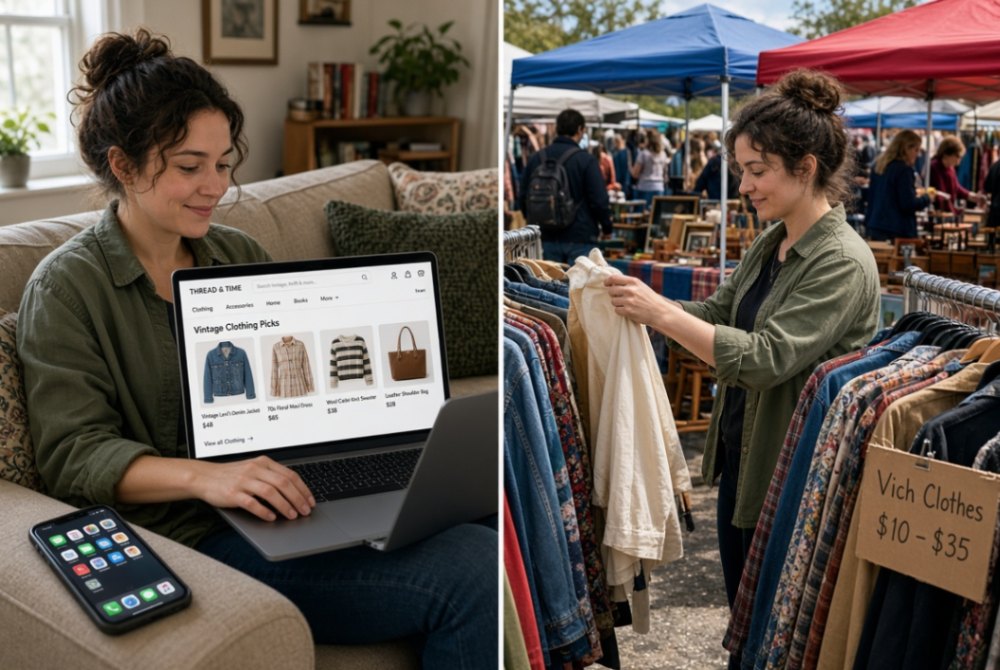
Online thrift shopping and in-person market shopping offer different ways to find affordable secondhand clothes, shoes, bags, jewellery, hair, and accessories in Nigeria. Online platforms provide convenience and wider access, while physical markets let you inspect items, negotiate directly, and take purchases home immediately.
The better choice depends on what you are buying, how much time you have, your location, delivery options, and how comfortable you are assessing an item through photographs or video. In Lagos, for example, physical thrift markets such as Yaba, Katangowa, and Aswani are known for large volumes of secondhand clothing, while social media and peer-to-peer marketplaces allow shoppers to browse from home. Nigerian secondhand fashion has also grown as rising living costs encourage shoppers to seek lower-cost clothing options. Local thrift markets have become vital for this access.
Online thrift shopping involves finding pre-owned items through websites, WhatsApp catalogues, Instagram pages, social media groups, or peer-to-peer marketplaces. A seller normally uploads photographs, provides a description, answers questions, and arranges collection, delivery, or dispatch.
Online listings can include:
The main difference from market shopping is that you make an initial decision without physically touching the item. Photos, measurements, videos, seller communication, and return arrangements therefore become important parts of the buying process.
In-person thrift shopping takes place at open markets, roadside stalls, clothing warehouses, pop-up sales, resale boutiques, and community events. You inspect the item directly, ask questions face to face, compare several pieces, and often negotiate the final price.
Physical shopping is common in many Nigerian cities because it connects buyers with local traders and gives shoppers immediate access to stock. Market conditions vary considerably: some stalls sell mixed bales of clothing, while others specialise in curated pieces such as vintage shirts, office wear, denim, sportswear, or designer-inspired accessories.
How Far Can ₦5,000 Really Go at a Thrift Market?
10 Thrift Finds Under ₦2,000 You Need to See
How to Recreate a Celebrity Look With Thrift Pieces
Thrift Date Night Outfits That Don’t Look Cheap
Thrift Outfit Ideas for Campus: Stylish School Looks on a Budget
Thrifted Street Style: Outfits Spotted on Lagos Streets
Have something to give away or sell?
Post your first listing — it only takes a couple of minutes. Or browse listings near you.
In-person shopping can also be social. Friends may visit a market together, compare finds, and share information about prices, locations, and reliable sellers.
| Factor | Online thrift shopping | In-person market shopping |
|---|---|---|
| Convenience | Browse from home or work | Requires transport and time |
| Inspection | Based on photos, video, measurements, and questions | Allows direct examination |
| Price comparison | Multiple listings can be compared quickly | Comparison requires moving between stalls |
| Negotiation | Usually through chat or calls | Takes place face to face |
| Delivery | May add dispatch or transport fees | Item can often leave with you |
| Selection | Access to sellers outside your neighbourhood | Depends on the market and day |
| Fit assessment | Measurements are essential | You may inspect or sometimes try on the item |
| Trust | Depends on listing accuracy and seller behaviour | Depends on seller, surroundings, and payment process |
| Availability | A desirable item may sell before you respond | You can buy an item immediately |
| Safety | Requires digital and delivery precautions | Requires personal safety and cash-handling awareness |
Neither channel eliminates risk. Online shoppers need to verify descriptions and arrangements, while market shoppers need to protect their belongings, inspect items carefully, and avoid rushed purchases.
Online browsing removes the need to travel through traffic or spend hours moving between stalls. This can be useful for shoppers in areas far from major markets or for people comparing items during a short break.
A shopper in Abuja, Ibadan, or Port Harcourt can also view items listed by sellers in another city, although delivery cost and reliability need to be considered before confirming the purchase.
Digital listings can be searched by category, size, gender, colour, condition, or location when those details are provided. Comparing three dresses priced at ₦12,000, ₦15,000, and ₦18,000 can take minutes online, while a physical comparison may involve visiting several stalls.
Price comparison is more meaningful when the items have similar:
Online browsing allows you to eliminate items that do not match your size, budget, colour preference, or intended use. You can ask for additional photographs of seams, soles, zips, labels, inner linings, or areas with visible wear.
This reduces unnecessary trips, particularly when a market is far away or transport fares are high.
A physical market offers the stock available at that location. Online shopping can expose you to individual sellers, curated thrift pages, wardrobe-clearout listings, donation posts, and buyers or sellers in different parts of Nigeria.
This wider access can be useful for less common sizes, specific shoe types, modest clothing, maternity wear, vintage pieces, school items, or children’s clothing.
A listing can record the stated price, measurements, condition, material, and known defects. Keeping the conversation and listing details can help you remember what was represented before collection or delivery.
This does not guarantee a refund or resolve every disagreement, but clear written communication reduces confusion about what was discussed.
Lighting, filters, camera angles, and editing can change how an item appears. A black dress may look darker in a photograph, while a small stain or fabric thinning may not be visible.
Ask for natural-light photographs or a short video showing the item from different angles. For shoes and bags, request images of soles, corners, handles, zips, interiors, and labels.
A listed size such as “medium” does not have a universal measurement. Vintage clothing, imported clothing, Nigerian sizing, stretch fabrics, and tailoring can all affect fit.
Useful measurements include:
| Item | Measurements to request |
|---|---|
| Dress | Bust, waist, hips, shoulder, length |
| Trousers | Waist, hips, rise, inseam, full length |
| Shirt | Chest, shoulder, sleeve, length |
| Skirt | Waist, hips, length |
| Shoes | Stated size, foot length, width, insole measurement |
| Bag | Height, width, depth, strap drop |
Compare these measurements with a garment or shoe you already own rather than relying only on the label.
A ₦10,000 item may become ₦12,000 or more after dispatch, pickup, packaging, or location-based delivery charges. Delays, traffic, rain, failed calls, and incorrect addresses can also affect collection.
Before payment or dispatch, confirm:
A polished page does not automatically prove that a seller is trustworthy. Warning signs include pressure to pay immediately, refusal to answer basic questions, inconsistent names or account details, stock photographs, and prices that appear unusually low without a clear explanation.
The Nigeria Data Protection Act framework also makes responsible handling of personal information important. Share only the details needed for the transaction, such as a delivery name and contact number, rather than unnecessary identity information.
Many peer-to-peer sellers do not operate like formal retail shops with standard return systems. A buyer may not be able to return an item simply because the colour or fit feels different from expectations.
Ask about exchanges, refunds, defects, and incorrect items before completing the transaction. The Federal Competition and Consumer Protection Act provides Nigeria’s general consumer-protection framework, but the practical remedy can depend on the seller, the transaction, the evidence available, and the nature of the complaint.
Physical inspection reveals details that photographs may miss. Run your eyes and hands over the fabric, check the seams, inspect the inside, and look for odour, fading, loose threads, holes, stains, broken fasteners, and alterations.
For footwear, examine:
For bags, inspect the base, corners, handles, lining, zip, buttons, and strap attachments.
Face-to-face bargaining is common in many Nigerian markets, although the final price depends on the seller, item condition, demand, and location. A calm conversation based on visible defects is more useful than making an unrealistic offer.
For example, a jacket marked at ₦18,000 with a missing button and minor sleeve wear may lead to a discussion around a lower amount, while a clean, well-preserved jacket may have less room for negotiation.
There is no waiting for dispatch when you complete the purchase at the market. This is useful for urgent needs such as a wedding outfit, workwear, school clothing, travel items, or a replacement pair of shoes.
Immediate possession also means you can check the item again before leaving the market area.
Market shopping encourages browsing beyond a planned search. A shopper looking for a shirt may find a useful blazer, bag, belt, or pair of trousers nearby.
This can be positive when you have a clear spending limit and inspect each additional item rather than buying solely because it appears unusual or inexpensive.
The purchase price is not the only cost. Add transport, parking, food, time away from work or school, and possible market-entry or courier arrangements.
A ₦8,000 pair of trousers may become more expensive in practice if the trip requires ₦3,000 in transport and several hours of travel.
Busy markets may have limited changing space, poor lighting, dust, rain exposure, or tightly packed clothing. These conditions can make it easier to miss stains, repairs, or missing components.
A small torch, measuring tape, hand sanitiser, and reusable shopping bag can make the inspection process easier without adding much weight.
Some sellers use urgency to encourage immediate payment. Rushed decisions make it harder to compare prices or notice defects.
Take a short pause before paying, especially for higher-priced items. Recheck the size, condition, quantity, and agreed price at the point of purchase.
Keep phones, wallets, and bags secure in crowded areas. Avoid displaying large amounts of cash, and use well-known meeting points when arranging collection from a seller outside the market.
If a transaction becomes confrontational or confusing, leaving the location can be safer than continuing an argument over a low-value item.
Prices vary by city, condition, brand, season, seller, and demand. The figures below are illustrations for comparing the full shopping cost, not fixed Nigerian market prices.
| Purchase situation | Item price | Extra cost | Approximate total |
|---|---|---|---|
| Online dress with local pickup | ₦12,000 | ₦0–₦1,000 | ₦12,000–₦13,000 |
| Online shoes with dispatch | ₦15,000 | ₦2,000–₦4,500 | ₦17,000–₦19,500 |
| Market trousers | ₦8,000 | ₦1,500–₦3,000 transport | ₦9,500–₦11,000 |
| Market handbag | ₦14,000 | ₦0–₦2,000 transport share | ₦14,000–₦16,000 |
| Online donated clothing | ₦0 | Pickup or dispatch cost | ₦0–₦4,500 |
| Physical market bundle | ₦25,000 | Transport and packaging | ₦27,000–₦31,000 |
A low item price does not automatically mean a lower total cost. Comparing the complete amount, including transport or delivery, gives a clearer picture.
Before paying for an online thrift item:
No payment method completely removes fraud risk. Where a seller refuses reasonable verification or changes the agreement repeatedly, ending the conversation may prevent a larger problem.
Before leaving the market:
For hair and accessories, inspect the condition carefully and ask specific questions about previous use, cleaning, repairs, missing parts, and storage. Product-specific hygiene and safety considerations can differ, so avoid making assumptions from appearance alone.
| Your priority | More suitable route to explore |
|---|---|
| Limited time | Online browsing |
| Need to touch and inspect fabric | In-person market |
| Shopping from another city | Online listing |
| Need the item immediately | Physical shopping |
| Looking for uncommon measurements | Online and multiple sellers |
| Learning prices for the first time | Market comparison |
| Avoiding transport costs | Online with pickup or nearby seller |
| Buying shoes or fitted clothing | In-person inspection or detailed online measurements |
| Finding donated items | Online community listings or local networks |
| Shopping with friends | Physical market visit |
Many shoppers combine both methods. You can browse online to understand styles and price levels, visit a market to inspect similar items, and then choose the option with the clearer condition and lower total cost.
Secondhand shopping can extend the useful life of clothing and reduce demand for immediate replacement. Nigerian resale activity also supports traders, curators, repairers, dispatch riders, and small businesses.
The environmental effect is not automatically positive in every case. Research on international secondhand clothing flows has raised concerns about waste management, unequal trade patterns, and pressure on local textile systems in African countries. A practical circular approach includes buying items that will be used, caring for them, repairing them, swapping them, donating them, or reselling them when they no longer fit your needs.
Before buying, consider three questions:
This approach reduces impulse buying and makes secondhand shopping about use and longevity rather than collecting more items.
If you prefer browsing from home, Threddo provides a Nigeria-focused space for listings across clothing, shoes, bags, jewellery, hair, accessories, and donations. Its direct buyer-seller format makes clear descriptions, accurate photos, careful communication, and safe collection arrangements especially important. You can also review the platform’s Safety Guide and browse available listings.
Online thrift shopping offers convenience, broader access, written listings, and quick price comparison, while in-person market shopping offers direct inspection, immediate collection, face-to-face negotiation, and the chance to discover unexpected pieces. For many Nigerian shoppers, combining both approaches provides a practical way to compare prices, check quality, manage delivery costs, and reduce rushed decisions.
This article is for educational purposes only and does not constitute professional advice. Always follow safe trading practices and use your own judgement.