T
Loading…
Loading…
Last Updated: September 2026
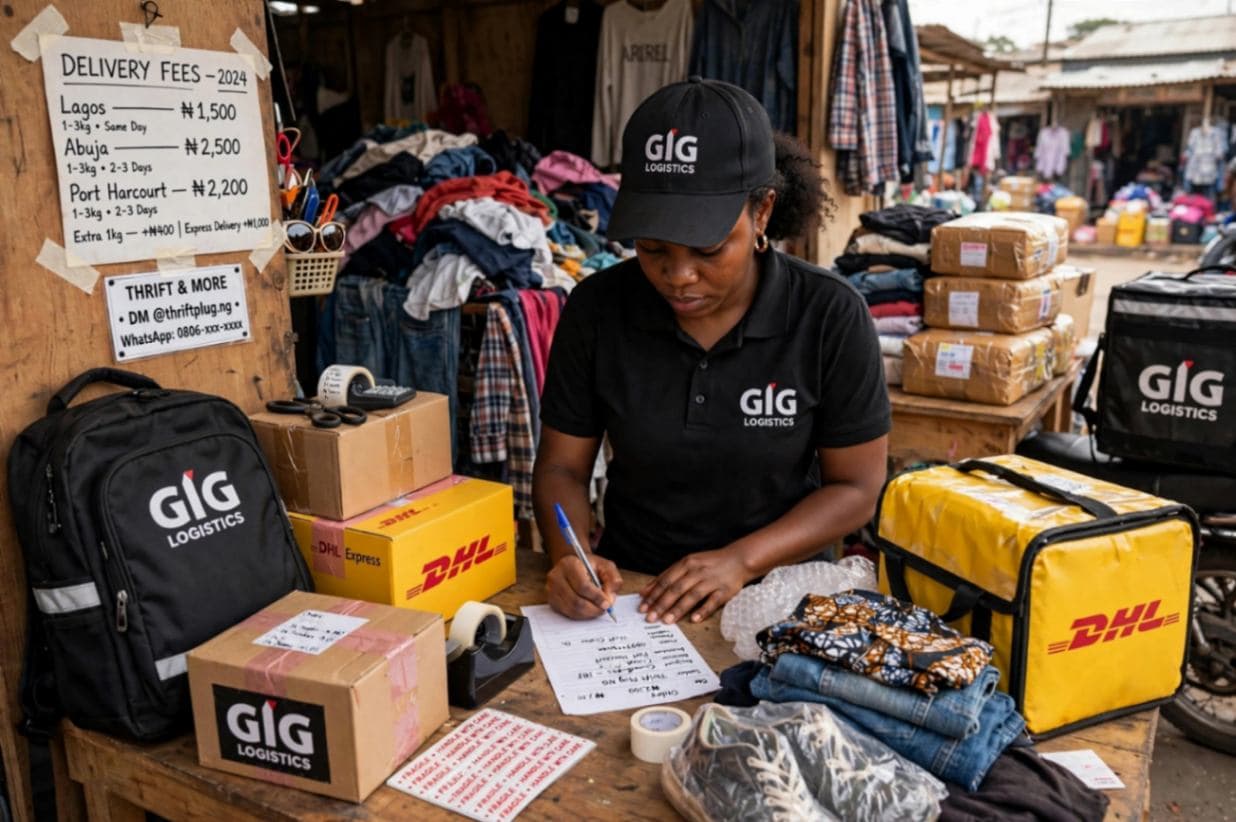
Delivery fees can determine whether a buyer completes a secondhand fashion purchase or abandons the conversation. A clothing item listed at ₦8,000 may feel affordable until a buyer receives an unexpected ₦4,000 delivery charge.
Fair delivery pricing does not mean choosing one flat rate for every order. It means calculating the real cost of moving an item from the seller to the buyer, explaining the amount clearly, and avoiding surprise charges. This guide explains how to price delivery fees in Nigeria for clothes, shoes, bags, jewellery, hair, and accessories.
Nigeria’s secondhand fashion market includes physical thrift markets, social-media sellers, WhatsApp businesses, and peer-to-peer marketplaces. Local thrift markets continue to support access to affordable fashion, while online resale makes it easier for buyers and sellers to transact across neighbourhoods and cities.
A delivery fee is the amount paid to transport an item from the seller or pickup point to the buyer. Depending on the arrangement, it can include more than the rider’s movement from one address to another.
Common delivery-cost components include:
For example, a seller in Yaba delivering a folded blouse to Surulere may face a different cost from delivering the same blouse to Ikorodu. The item has not changed, but the distance, route, traffic, and logistics provider have.
A fair fee is therefore connected to the delivery route rather than only the item’s selling price.
A simple formula helps prevent guesswork:
$ \text{Delivery fee} = \text{Base transport cost} + \text{distance or zone charge} + \text{extra service costs} $
The base transport cost may cover pickup and short-distance movement. The distance or zone charge accounts for travel beyond the local area. Extra service costs may include waiting, special handling, tolls, or a second delivery attempt.
Have something to give away or sell?
Post your first listing — it only takes a couple of minutes.
Suppose:
The total delivery-related cost is:
$ ₦800 + ₦1,200 + ₦200 + ₦300 = ₦2,500 $
The seller can present this as:
Delivery to the buyer’s location: ₦2,500, including packaging and estate access.
If packaging is free or already included in the item price, the buyer can be told that the delivery charge is ₦2,300 instead. The important point is that the components are clear.
Delivery within the same neighbourhood usually costs less than cross-city delivery. In Lagos, a trip from Ikeja to Lekki, Agege to Ajah, or Yaba to Ikorodu can involve significant traffic and distance differences.
A seller can organise delivery zones such as:
| Delivery zone | Example route type | Illustrative fee range |
|---|---|---|
| Nearby area | Same neighbourhood or adjoining area | ₦800–₦1,500 |
| Nearby district | Short cross-community trip | ₦1,200–₦2,000 |
| Cross-city route | Longer trip within the same city | ₦1,800–₦3,500 |
| Outer city or difficult route | Farther locations, heavy traffic, or limited access | ₦3,000–₦6,000+ |
| Intercity delivery | Lagos to Ibadan, Abuja to Kaduna, or similar | ₦3,000–₦10,000+ |
These are planning ranges rather than fixed market prices. Actual charges change according to the rider, logistics provider, time, weather, traffic, package, and exact address.
A pair of lightweight earrings is easier to transport than boots, a box of clothing, or a wig packed in a large protective carton.
Delivery providers may price packages according to:
A seller offering multiple secondhand items can ask the logistics provider whether the items qualify as one combined package. Combining orders may reduce the transport cost per item, although the buyer and seller need to agree on how the fee is divided.
Same-day delivery often costs more than regular delivery because it requires quicker dispatch and tighter coordination.
A clear listing can distinguish between:
For instance, a seller may quote ₦1,500 for regular delivery and ₦2,500 for same-day delivery, based on the logistics provider’s actual rates. The buyer can then choose the option that fits the transaction.
Peak-hour delivery may cost more when a rider spends longer on the route. Rain, road closures, fuel shortages, security restrictions, and busy commercial periods can also affect availability.
It is useful to confirm the current charge before dispatch rather than relying on a previous delivery quote. A fee that was accurate last week may change because the route, rider, or destination has changed.
An incomplete address creates delays and can cause additional calls, waiting, or redelivery. A buyer can provide:
For safety, sensitive personal information should be shared privately with the confirmed delivery provider rather than posted publicly in a marketplace listing.
With exact-cost pricing, the buyer pays the confirmed delivery charge from the rider or logistics company.
Example:
Rider quote to your address: ₦1,800. Packaging is included.
This method works well when routes vary widely or when the seller is using on-demand riders.
Zone pricing uses a small number of location bands.
Example:
This is easier to understand than listing dozens of neighbourhoods. It also allows buyers to estimate the total cost before messaging.
Some buyers prefer to arrange a rider they trust. The buyer then pays the rider directly or manages the logistics booking.
The listing can state:
Buyer may arrange pickup with an agreed rider. Item will be released after payment confirmation and rider details are verified.
This reduces uncertainty for sellers, but the handover instructions need to be agreed in writing.
A seller may include delivery in the price after a minimum order value, such as:
Free delivery within Zone A on orders from ₦20,000.
This is not truly free from a cost perspective; the delivery cost is covered through the order price or seller margin. The wording should not mislead buyers about the locations or conditions covered.
A listing becomes easier to evaluate when the buyer can see the item price and delivery arrangement separately.
Black leather handbag — ₦12,000
Delivery within Yaba and Surulere: from ₦1,200
Other Lagos locations: delivery quoted by address
Buyer pickup: available by arrangement
Bag — ₦12,000. Delivery applies.
The second version leaves the buyer unsure whether delivery costs ₦500 or ₦5,000. Ambiguity can create distrust, especially in secondhand transactions where the buyer may already want more information about condition and authenticity.
Before confirming an order, check the following:
A written confirmation can prevent disputes:
Item: blue denim jacket
Item price: ₦7,500
Delivery: ₦1,500
Total: ₦9,000
Delivery method: same-day rider
Destination: confirmed privately
If the buyer is unavailable, redelivery will be quoted separately.
Overcharging often happens when sellers add a vague “logistics” amount without checking the actual route. A seller may also forget that the buyer is comparing the final price with similar listings.
Practical controls include:
For example, if the rider charges ₦1,700 after the seller estimated ₦2,000, the seller can tell the buyer the actual charge and return or remove the ₦300 difference instead of treating it as an unexplained extra.
A failed delivery can occur because:
The payment responsibility depends on the reason and the arrangement made before dispatch. A clear policy might say:
Delivery charges are paid before dispatch. If delivery fails because the address or availability changes, a new delivery quote may apply. If the error is from the seller, the seller will discuss the appropriate correction with the buyer.
This is educational guidance rather than a legal determination. Nigerian consumer-protection principles generally emphasise transparent information and fair treatment, so delivery terms should not be hidden or changed without explanation. Nigeria’s Federal Competition and Consumer Protection Commission is the relevant federal consumer-protection authority, and its consumer-protection framework covers fair dealing and information provided to consumers.
A delivery charge can also be used in scams. Warning signs include a request for a large “release fee,” pressure to send money to an unrelated account, or a fake rider claiming that an item is held by customs or security.
Safer practices include:
For secondhand clothing, shoes, bags, jewellery, hair, and accessories, the buyer can request current photos and confirm condition before arranging delivery. The cost of delivery does not guarantee that the item itself is genuine, unused, or free from defects.
Fair delivery planning can reduce unnecessary trips and failed drop-offs. When several buyers in the same area order within a similar period, a seller may coordinate a combined route if each buyer agrees to the arrangement.
This can reduce:
Combining deliveries requires accurate labelling so that each buyer receives the correct item. It also requires clear communication about the expected delivery window, since grouped routes may not arrive at exactly the same time.
Secondhand fashion can extend the useful life of clothing and accessories, but delivery still has environmental and financial costs. Research on Africa’s secondhand clothing value chain highlights the complexity of calling all resale activity sustainable without considering transport, waste management, and wider trade systems.
A buyer purchases a thrifted shirt for ₦6,000. The confirmed rider quote is ₦1,000, and packaging costs ₦100.
The seller can disclose whether the ₦100 packaging charge is separate or already included in the item price.
A buyer purchases:
The items fit into one package, and the confirmed delivery cost is ₦2,000. The buyer’s total is:
$ ₦8,000 + ₦5,000 + ₦7,000 + ₦2,000 = ₦22,000 $
The seller can describe the ₦2,000 as one combined delivery fee rather than charging three separate full delivery fees.
A buyer in Abuja purchases an item from Lagos. The seller receives a logistics quote of ₦5,500, excluding final movement from the transport terminal to the buyer’s address.
The listing can state:
Intercity transport from Lagos: ₦5,500. Final delivery from the terminal will be quoted separately based on the buyer’s address.
This avoids presenting a terminal-to-door service when the quote only covers part of the route.
You can adapt this wording for a listing or WhatsApp conversation:
Delivery is calculated by location, package size, and delivery speed. The confirmed rider or logistics charge will be shared before dispatch. Same-day and intercity delivery may cost more. The buyer’s address and availability must be confirmed before booking. Any additional charge caused by an address change, waiting time, or redelivery will be discussed before it is incurred.
Threddo can be used to post secondhand fashion listings and connect directly with buyers; sellers can also use a dedicated safety page such as /safety to keep delivery conversations clear and cautious.
To price delivery fees fairly in Nigeria, separate the item price from transport costs, confirm the route, account for package size and timing, and explain every charge before dispatch. Exact-cost pricing, zone pricing, buyer-arranged delivery, and clearly stated pickup options can all work when the terms are transparent.
For clothes, shoes, bags, jewellery, hair, and accessories, a delivery fee from ₦800 to ₦3,500 may apply to many local routes, while outer-city and intercity deliveries can cost more depending on the location and logistics provider. These figures are planning ranges, not fixed tariffs.
This article is for educational purposes only and does not constitute professional advice. Always follow safe trading practices and use your own judgement.