T
Loading…
Loading…
Last Updated: September 2026
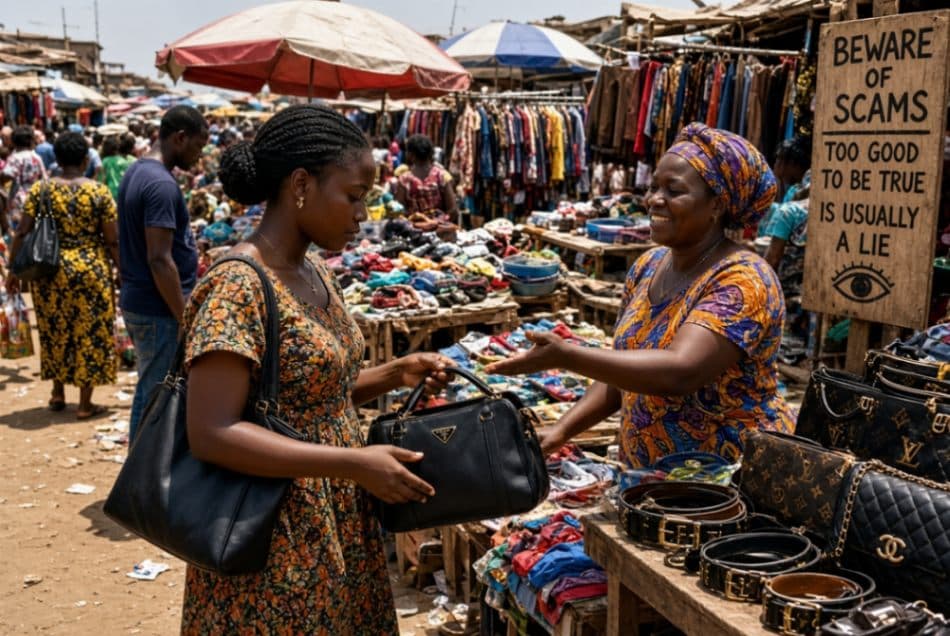
Thrift trading in Nigeria is popular because it makes fashion more affordable, but it also attracts scams that target both buyers and sellers. The safest way to trade is to understand the most common fraud patterns, verify people and items carefully, and keep every transaction as clear as possible. Threddo’s own safety guide reflects this reality: meet in public, inspect before paying, never send money upfront to strangers, and report suspicious listings quickly.
Secondhand fashion works well when trust is high, but trust is also the point fraudsters try to exploit. In many Nigerian buying-and-selling spaces, deals happen through WhatsApp, Instagram, or informal market chats, so there is often no strong platform control, no fixed address, and no automatic payment protection. That makes it easier for scammers to use fake alerts, edited screenshots, false identities, pressure tactics, and delivery tricks.
Nigeria’s consumer and cybercrime discussions also point to identity theft, phishing, and online fraud as real risks in digital commerce. For thrift shoppers, that means a careful process is not paranoia; it is normal market hygiene.
| Scam pattern | How it usually works | Safer response |
|---|---|---|
| Fake payment alert | A buyer or seller shares a screenshot or edited bank alert instead of a real credit. | Confirm the money in your bank app or account before releasing anything. |
| Overpayment trick | A buyer sends extra money and asks for a refund of the difference before funds are verified. | Wait for cleared funds before any refund action. |
| Verification-code theft | Someone asks for a WhatsApp, OTP, banking PIN, or login code. | Never share codes or passwords with any buyer, seller, or “support” account. |
| Fake customer support | A scammer pretends to be platform staff and pushes urgent steps or links. | Use only official platform contact routes and ignore surprise messages. |
| Bait-and-switch listing | The listing photos look clean, but the delivered item is worn, damaged, or not the same product. |
Have something to give away or sell?
Post your first listing — it only takes a couple of minutes.
| Ask for fresh photos, a short video, and close-ups of tags, seams, soles, or zips before agreeing. |
| Pressure sale | The seller says “last piece” or “pay now” to stop you from checking properly. | Slow down, compare options, and walk away from rushed deals. |
| Delivery fee scam | A fake courier asks for unexpected charges before releasing a parcel. | Confirm delivery terms before payment and do not pay surprise fees to unknown handlers. |
A fake thrift deal often reveals itself through small details before money changes hands. The clearest warning signs are urgency, inconsistency, and reluctance to show proof. If the seller avoids video calls, refuses extra photos, changes the story about location, or keeps moving the collection point, treat that as a risk signal.
Other red flags include prices that are far below normal without a believable reason, odd account names that do not match the person’s profile, and requests to move the chat away from normal channels too quickly. A scammer often wants speed more than clarity, because clarity makes the fraud harder to pull off.
When I review a thrift listing, I look for proof that the item is real, usable, and exactly as described. That means checking the front, back, inside, labels, straps, soles, zippers, stains, and repairs for clothing, shoes, bags, jewelry, or hair items. Clear photos matter because many thrift scams depend on hiding defects in low-resolution or recycled images.
For physical meetups, a public place is safer than a private house, especially in a first-time trade. Busy mall entrances, bank surroundings, or well-lit public locations are common safer options because they reduce isolation and make a dispute easier to manage.
Sellers face scams too, especially when buyers try to manipulate screenshots, overpay, or create confusion around delivery. A seller can reduce risk by confirming the buyer’s identity, checking that the WhatsApp profile matches the listing discussion, and avoiding any release of goods before payment is truly confirmed. If a buyer suddenly changes numbers, pressures for immediate dispatch, or asks for a code, that is a strong signal to pause.
In Nigeria, scam messages often borrow familiar language to sound normal. A fraudster may claim to be a “dispatch rider,” “platform admin,” or “buyer with urgent cash,” because those roles fit the way people already trade informally. That social realism is what makes the scam believable, not the technology alone.
| Local pattern | What it can mean | Safer response |
|---|---|---|
| “I have sent the alert” | The screenshot may be fake or the transfer may still be pending. | Check your account directly. |
| “My cousin will pick it up” | The person collecting may not know the item details and may change the deal. | Reconfirm identity, time, and location before release. |
| “Pay logistics now” | The fee may not be real, especially if the seller never mentioned it earlier. | Verify the delivery arrangement before paying. |
| “I need a code to confirm payment” | This is often account takeover or WhatsApp fraud. | Never share codes or passwords. |
These patterns are especially common in peer-to-peer markets because the trade feels personal, fast, and informal. That informality can be convenient, but it also means you need to slow the deal down enough to verify the facts.
One useful anti-scam habit is to compare the asking price with normal secondhand ranges. In Nigeria, curated Instagram or WhatsApp thrift pieces can sit around ₦3,000 to ₦25,000 per item depending on brand, category, and condition, while even lower prices can still be genuine if the seller explains the reason clearly. When a price is far below the usual range with no condition note, no extra photos, and no timeline clarity, it deserves more scrutiny.
The goal is not to assume every cheap item is fake. The goal is to look for a believable reason: a donation, a closet clear-out, a bundle sale, or a same-day pickup. When the story is missing, the risk usually rises.
A short routine is often enough to avoid most common scam attempts.
This routine works because it blocks the main scam tools: speed, confusion, and unverifiable claims. It also makes it easier to resolve disputes if something goes wrong.
Threddo is built around direct WhatsApp contact, no fees, and no in-app payments, so the safest habits are the same ones that protect you in any peer-to-peer trade: public meetups, item inspection, and no upfront transfers to strangers. Its safety guide also emphasizes checking seller reviews, using escrow for higher-value items, and reporting suspicious listings so the community stays trustworthy.
Suppose you find a pair of sneakers listed at ₦8,000. The seller sends one polished photo, asks you to pay immediately, and offers to “arrange delivery” after you transfer. A safer response is to ask for a video showing both shoes, the soles, and the inside tag, then agree on a public meetup or a verified delivery process only after you have checked the item details.
Now compare that with another listing at ₦8,500 where the seller shares clear photos, a short video, the exact size, a stain on the inner lining, and a meeting point near a busy mall entrance. The second listing is not scam-free by default, but it gives you enough information to make a more informed decision.
The common thrift market scams in Nigeria usually rely on one of four things: fake proof, pressure, identity confusion, or hidden defects. If you slow the process down, verify the item and the person, and keep the trade public and documented, you reduce the chance of loss significantly. This article is for educational purposes only and does not constitute professional advice. Always follow safe trading practices and use your own judgement.