T
Loading…
Loading…
Last Updated: September 2026
Before Lagos fully warms up, a thrift seller may already be sorting clothes, checking transport money, replying to customers, and deciding which pieces deserve a place on the day’s display.
The work can look simple from the customer’s side: clothes are arranged on a rail, table, pavement, or tarpaulin, and buyers bend down to select what catches their eye. Behind that scene are early starts, uncertain sales, garment repairs, price negotiations, crowded transport, and the constant task of earning trust.
This is the everyday life of a thrift seller in Nigeria—part retail work, part styling, part logistics, and part customer service.
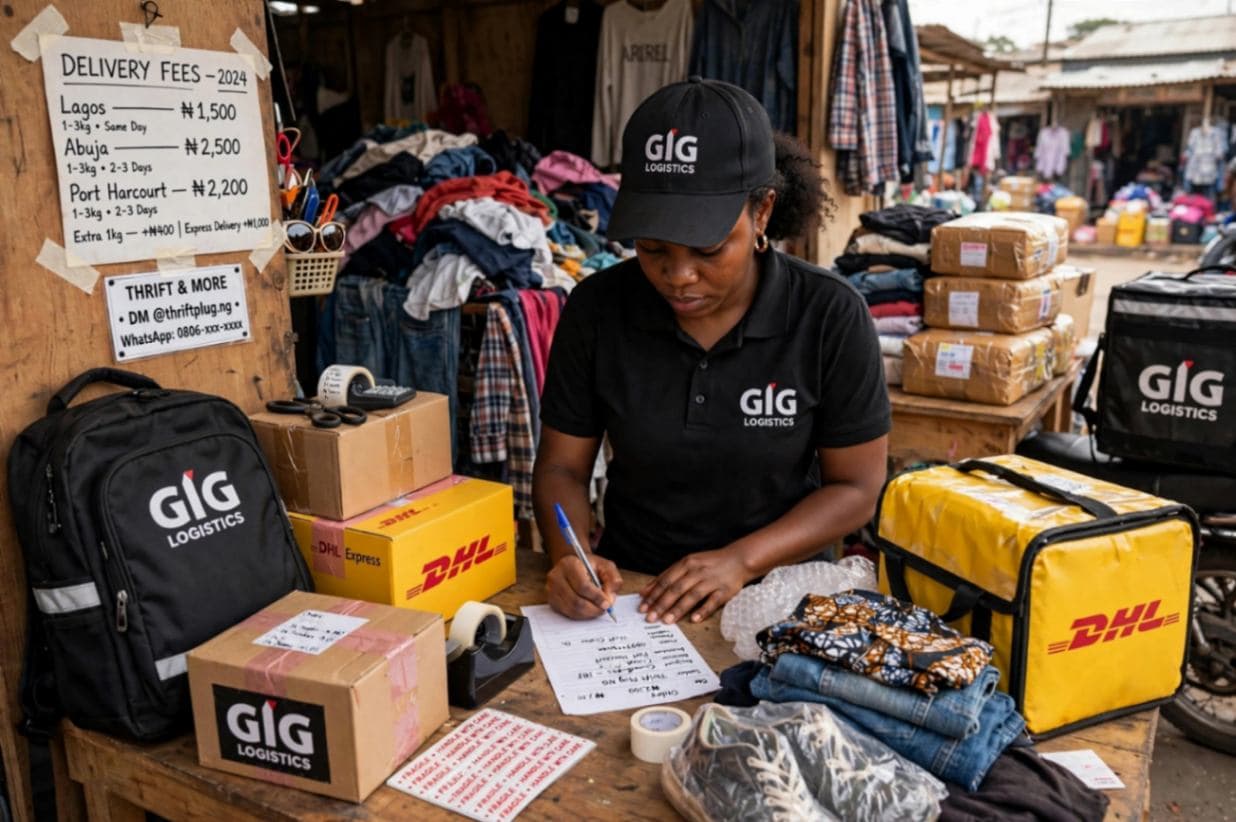
A typical day begins with preparation rather than selling. A seller may collect stock from a wholesaler, open a bale purchased with other traders, or bring out pieces saved from the previous day.
In Lagos, secondhand clothing is sold through different channels, including open markets, roadside stalls, home-based businesses, social media, WhatsApp groups, and direct customer networks. Yaba’s secondhand market, for example, has been described as a busy cluster around Popo Street, Olajuwon Street, and adjoining roads, with traders selling clothes and footwear from stalls, pavements, and temporary displays.
The first checks often include:
Sorting is important because a mixed pile may contain premium-looking pieces, ordinary daily wear, repairable items, and goods that are unsuitable for sale. A seller who separates these groups can explain condition more clearly and reduce disagreements after purchase.
Transport is part of the business day. A seller carrying clothing, rails, baskets, or bags may use a danfo, tricycle, motorcycle, ride-hailing service, or a combination of routes. The cost and difficulty depend on distance, traffic, the weight of stock, and whether the seller operates from a permanent shop or temporary location.
Have something to give away or sell?
Post your first listing — it only takes a couple of minutes.
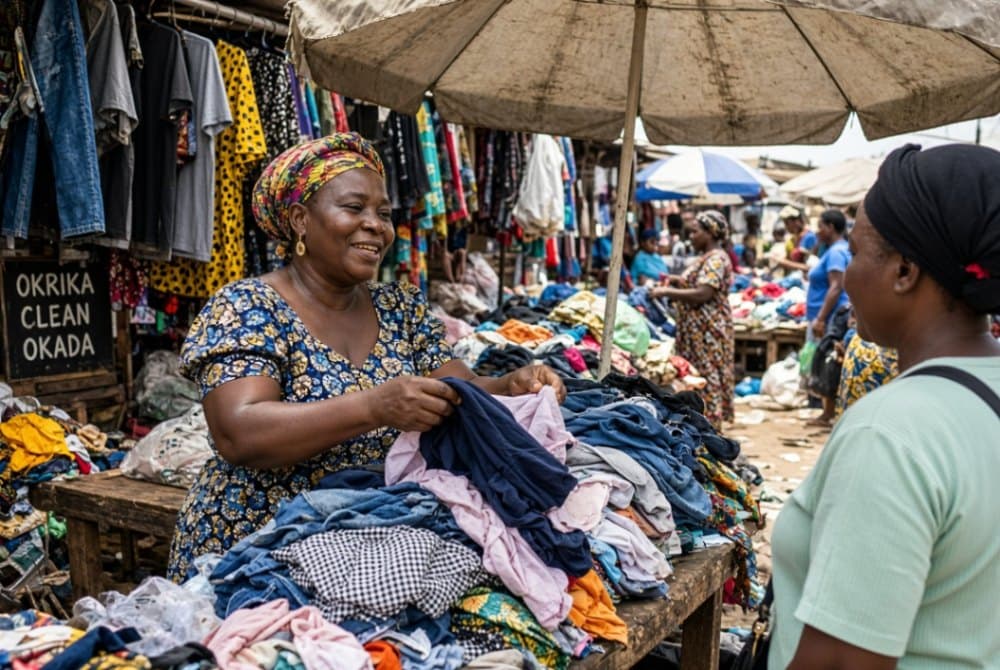
Space also affects the working day. Some traders operate from rented shops, while others sell from pavements, roadside areas, market corridors, or shared displays. Reporting from Yaba has documented traders working in congested spaces and using streets or pavements when shop space is limited or unaffordable.
This creates practical challenges:
A seller’s morning is therefore not only about fashion. It also involves protecting stock, managing movement, and finding enough room for customers to inspect items safely.
The first display is rarely random. Sellers often place eye-catching pieces where passing customers can see them quickly. Bright colours, denim, branded sportswear, dresses, jackets, handbags, shoes, and unusual vintage pieces may attract attention, while lower-priced items can be arranged in baskets or piles.
In Yaba, the familiar “bend down and select” format has become part of the market experience. Customers search through heaps of clothing while traders call out prices and invite people to look.
A well-organised display can answer some customer questions before the conversation starts. Useful signs or labels may include:
The Federal Competition and Consumer Protection Commission says businesses have responsibilities relating to understandable product information, price disclosure, and clear disclosure when goods are used, secondhand, or reconditioned.
There is no single price for a secondhand item. Sellers consider the original brand, condition, material, style, size, season, demand, repair cost, transport, bale cost, stall expenses, and the amount of time spent sourcing and preparing the item.
A price also reflects risk. Some pieces sell quickly, while others remain in stock for weeks. A seller may therefore use different price levels for:
The table below is an illustrative retail-planning example, not a fixed Lagos market price list.
| Item type | Illustrative price range | Factors affecting price |
|---|---|---|
| Basic used T-shirt | ₦800–₦3,000 | Fabric, condition, brand, print |
| Used shirt or blouse | ₦1,500–₦6,000 | Cut, material, size, finishing |
| Jeans or trousers | ₦2,000–₦8,000 | Denim quality, fit, wear |
| Dresses | ₦2,500–₦12,000 | Design, fabric, occasion, condition |
| Used sneakers | ₦4,000–₦20,000 | Brand, sole condition, cleanliness |
| Handbags | ₦3,000–₦25,000 | Material, structure, hardware |
| Costume jewellery | ₦500–₦5,000 | Finish, completeness, design |
Reported examples show how affordable secondhand clothing can be in Lagos: one account of Yaba described fairly used shirts selling below ₦1,000, while new shirts in some boutiques were reported at ₦2,500–₦7,500 at the time of publication. Because prices change with inflation, location, quality, and supply, sellers can use current local comparisons rather than relying on old figures.
Once the display is ready, customer interaction becomes the centre of the day. Some buyers arrive with a specific request, such as “office trousers,” “a black dress,” “size 40 shoes,” or “children’s clothes.” Others browse without a plan and decide after seeing the stock.
A seller’s work may include:
Good customer service does not require hiding flaws. A small stain, loose seam, colour-fading area, repaired zip, or missing button can affect a buyer’s decision. Clear disclosure gives the buyer useful information and helps the seller avoid later disputes.
The FCCPC lists consumer rights relating to examining open-stock goods, receiving accurate information, and receiving goods reasonably suitable for their intended purpose.
Bargaining is part of many Nigerian markets, but it can become stressful when the initial price, final price, or item condition is unclear.
A simple bargaining conversation may look like this:
This example records the important details: the item, price, known condition, and agreement. A written WhatsApp message can provide a basic record for direct sales.
A seller can also establish terms before accepting payment:
Any restriction on a consumer’s rights or transaction terms should be brought to the buyer’s attention before the transaction, not after a complaint begins. The FCCPC’s consumer guidance discusses disclosure of terms, returns, fair dealing, and restrictions on misleading representations.
By midday, the seller may be doing several jobs at once. Customers continue browsing while the seller replies to WhatsApp enquiries, searches through stock, checks mobile transfers, negotiates with a supplier, and watches the display.
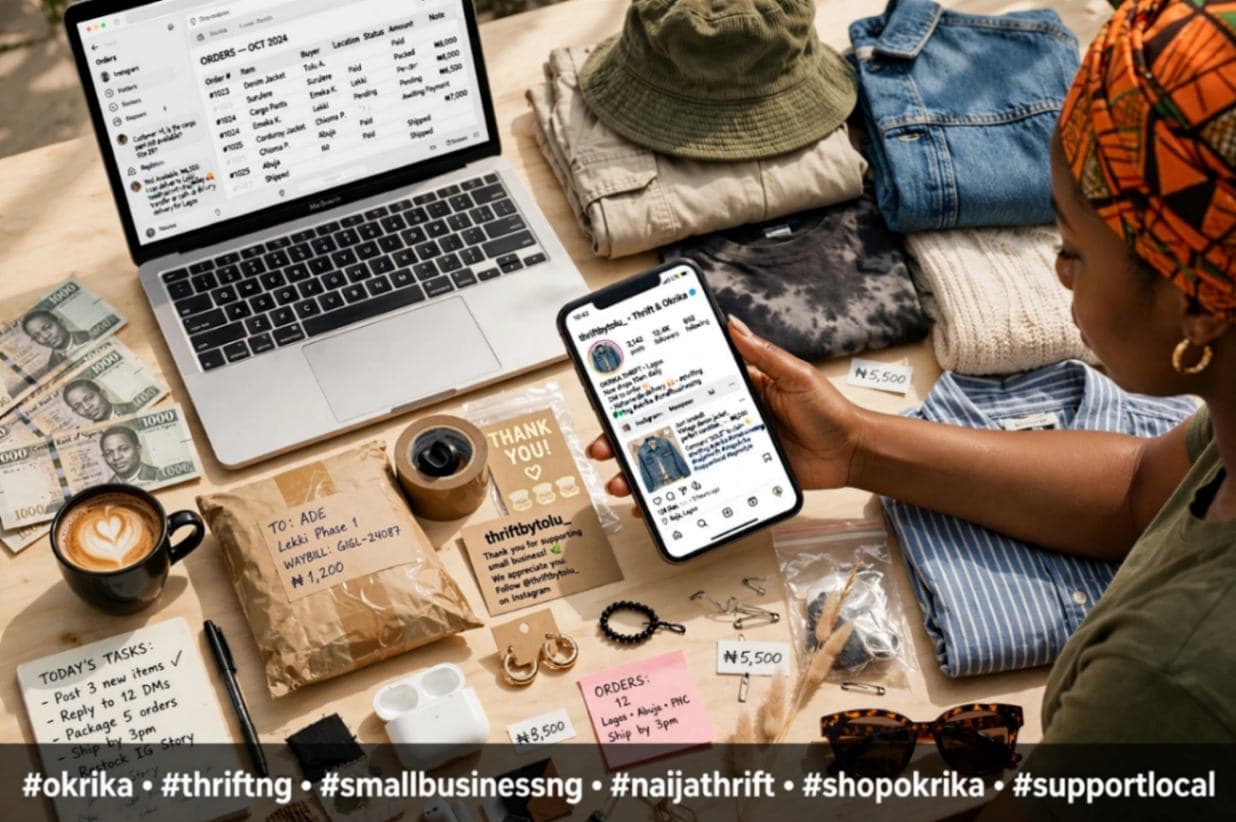
Online communication has changed how secondhand fashion moves through Lagos. A seller can photograph selected items, add measurements, post them in a status update, and arrange pickup or delivery. This helps reach buyers outside the immediate market but introduces another responsibility: photographs and descriptions must match the actual item.
A useful listing can include:
Descriptions such as “brand new,” “original,” “perfect,” or “no defect” carry practical meaning. They can create problems if the item does not support the claim. The FCCPC states that businesses must provide factually accurate information and avoid misleading or deceptive representations.
Secondhand selling gives clothing, shoes, bags, and accessories another period of use. It can also make distinctive styles more accessible to buyers who are managing household budgets.
In Lagos, research on textile collection has estimated textile waste at a broad range of 100 to 1,000 metric tonnes per day, while also noting that the available data has limitations and that formal textile-recycling systems have historically been limited. This uncertainty matters: secondhand shopping can extend product life, but unsellable or damaged textiles can still become waste.
A responsible seller can reduce avoidable waste by:
Circular fashion is not only about buying used clothing. It also includes repair, reuse, resale, swapping, donation, redesign, and responsible disposal.
| Time or stage | Common task | Practical check |
|---|---|---|
| Early morning | Gather stock and transport items | Count bags, rails, hangers, and cash |
| Before opening | Inspect garments and accessories | Separate defects and repairable pieces |
| Display setup | Arrange items by type or price | Keep prices and sizes easy to identify |
| First sales | Answer questions and negotiate | Confirm item condition and final price |
| Midday | Photograph and post selected goods | Show accurate images and measurements |
| Afternoon | Replenish display and track stock | Note sold, reserved, and unsold items |
| Closing | Count money and pack goods | Keep transaction records and protect stock |
A basic notebook or spreadsheet can contain:
This does not guarantee profit, but it helps the seller understand which categories move quickly and which pieces require more preparation.
Secondhand trading involves people who may not know one another. Safety procedures are relevant in physical markets, WhatsApp sales, home pickups, and deliveries.
Practical precautions include:
A public meeting point, clear price, accurate listing, and payment confirmation reduce several common points of confusion. They do not eliminate risk, so each transaction still requires judgement.
Closing is not simply packing everything into a bag. The seller may count remaining pieces, compare the day’s sales with the stock list, separate reserved items, clean the display area, and decide which products need new photographs or price adjustments.
The final customers of the day may include people returning from work, students, market traders, parents, or buyers looking for a quick outfit for an event. Some sellers also use the evening to respond to online enquiries from customers who saw a status update during the day.
For a small seller, a slow day does not necessarily mean the stock is poor. Weather, traffic, school calendars, salary dates, public events, market disruptions, and customer cash flow can all affect foot traffic. Keeping records over time provides more useful information than judging the business from one afternoon.
The life of a thrift seller in Nigeria is often described through prices, but the work also involves memory and judgement. Sellers learn which cuts fit local customers, which colours move during festive periods, which fabrics survive frequent washing, and which defects buyers are willing to repair.
Many sellers also become informal stylists. A customer may arrive searching for a shirt but leave with a complete outfit assembled from different racks. Another buyer may want a bag that works for school, work, or transport. The seller’s knowledge of stock can make the difference between a rushed purchase and a useful find.
At the same time, the work has limits. Income can change from day to day, damaged stock creates losses, and competition is intense. Secondhand markets also sit within a wider clothing system that includes local tailors, manufacturers, importers, wholesalers, repairers, delivery workers, market associations, and waste handlers.
That is why the everyday thrift seller is more than a person standing beside a pile of clothes. The seller is part of Lagos’s informal retail economy and part of the movement of garments through reuse, resale, repair, and eventual disposal.
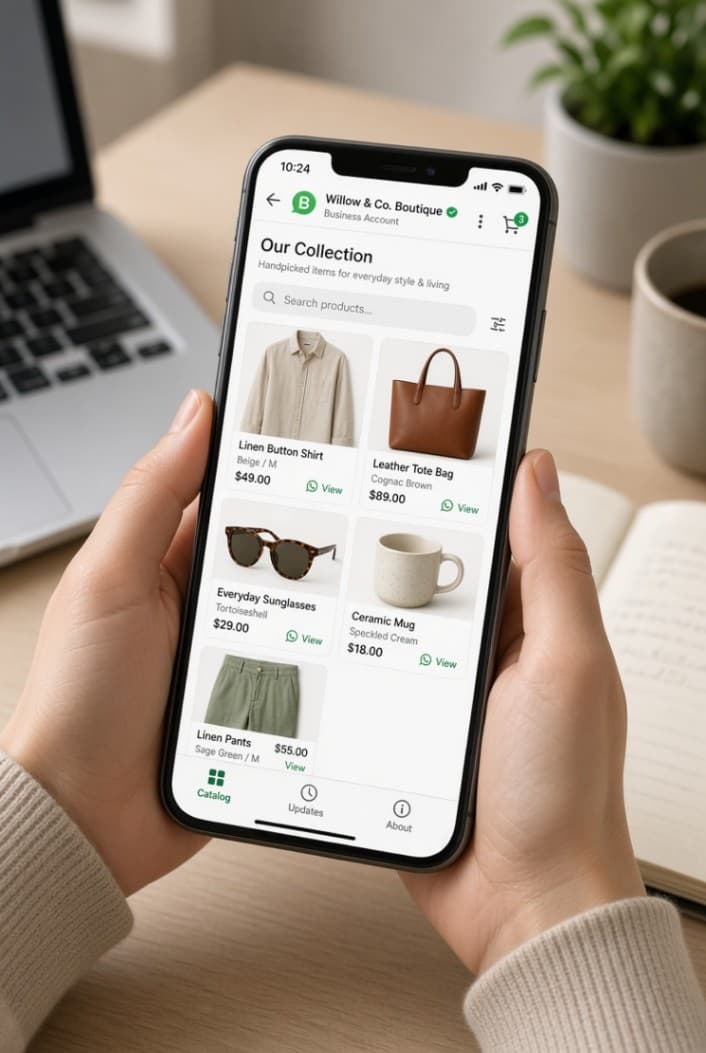
For sellers who want an additional channel beyond a physical market, Threddo is a free WhatsApp-first Nigerian marketplace for listing secondhand clothing, shoes, bags, jewellery, hair, and accessories. Clear photographs, honest condition notes, naira prices, and safe direct communication make an online listing easier to understand.
A day in the life of a Lagos thrift market seller includes sourcing, transport, sorting, pricing, bargaining, customer service, stock control, safety checks, and decisions about reuse. The visible sale is only one part of the work.
For buyers, the practical lesson is to inspect items, ask questions, confirm prices, and understand the condition before payment. For sellers, accurate descriptions, transparent terms, organised records, and respectful communication can support safer secondhand trading while keeping more usable fashion in circulation.
This article is for educational purposes only and does not constitute professional advice. Always follow safe trading practices and use your own judgement.