T
Loading…
Loading…
Last Updated: September 2026
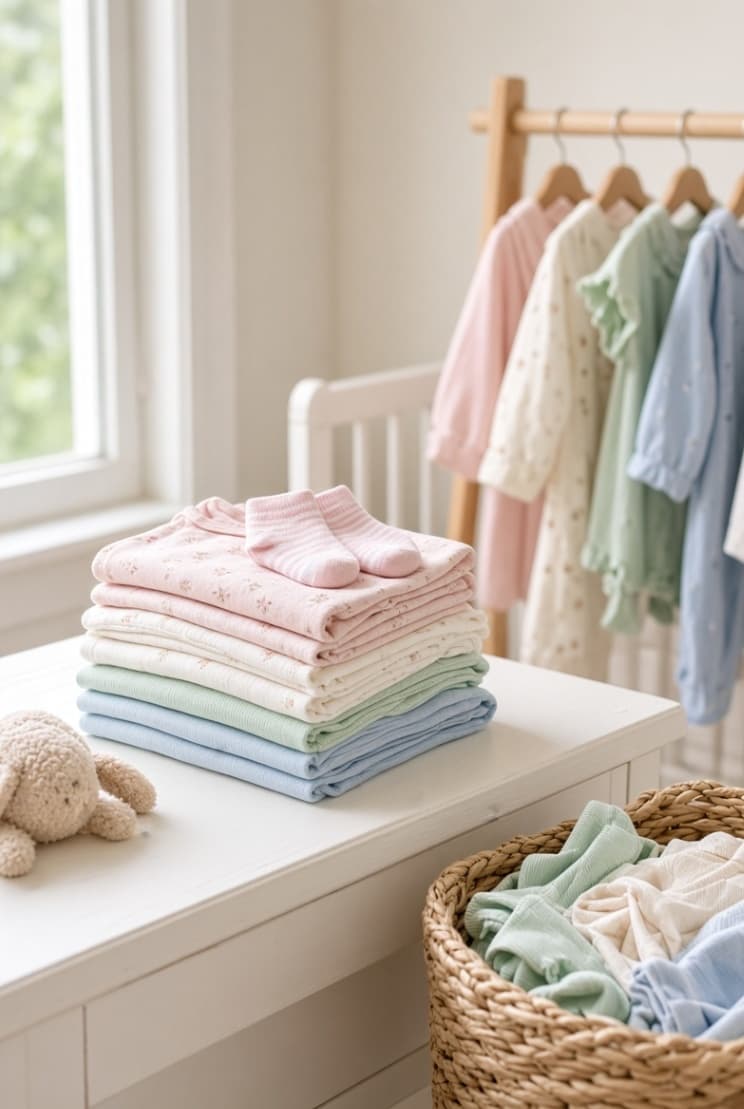
Secondhand baby clothes can be clean, affordable, and useful, but they need careful washing before a baby wears them. The goal is to remove dirt, odour, residue, and germs while protecting delicate skin and fabric.
Babies have sensitive skin and spend long hours in close contact with fabric, so cleanliness matters more than with adult clothing. Secondhand items may carry sweat, dust, detergent residue, milk stains, saliva, mould, or storage odour even when they look fine.
A careful wash routine also helps when clothes come from different homes, storage conditions, or markets. In Nigeria, where heat, humidity, and transport storage can affect fabric condition, a simple “smell and fold” check is not enough.
Before cleaning, inspect each item under good light. This saves time and helps you separate safe pieces from ones that need deeper cleaning or removal from use.
| Check point | What to look for | What it means |
|---|---|---|
| Fabric condition | Thin spots, tears, stretched seams | The item may not hold up well after washing |
| Odour | Musty, smoky, chemical, or mildew smell | The item needs a deeper wash or airing |
| Stains | Milk, food, diaper leaks, oil, rust | Some stains need pretreatment |
| Trim and fasteners | Loose buttons, broken snaps, rough zips | These can irritate or pose a choking risk |
| Labels | Care instructions, fabric type | Helps you choose the right water temperature |
| Elastic | Necklines, waistbands, socks | Weak elastic may no longer fit safely |
If an item has visible mould, a strong chemical smell that does not fade, or severe fabric damage, it is safer to treat it as unsuitable for a baby’s wardrobe.
A practical sanitizing process works best in stages: sort, pretreat, wash, rinse well, and dry fully. This is more effective than using one strong product alone.
Separate whites, colours, and delicate items. Keep heavily soiled pieces away from lightly used ones so dirt does not transfer during soaking or washing.
Have something to give away or sell?
Post your first listing — it only takes a couple of minutes.
For small baby items like socks, mittens, and bibs, use a mesh laundry bag or a tied pillowcase so they do not get lost in the wash.
Soaking helps loosen dirt and reduce odour before washing. Use warm water for most cotton baby clothes, but follow the care label for delicate fabrics.
A simple soak can include a mild baby-safe detergent or fragrance-free laundry liquid. Avoid mixing too many products at once because extra residue can stay in the fibres.
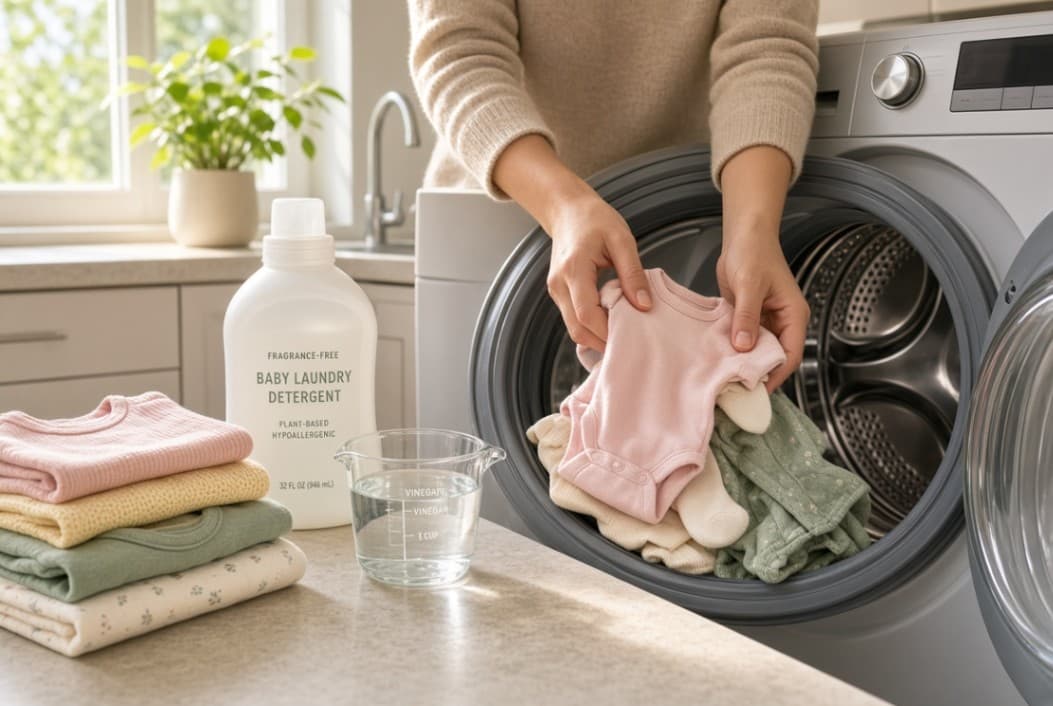
Use a fragrance-free or low-residue detergent when possible, especially for newborn items. A small amount is usually enough, because too much soap can remain in fabric and irritate skin.
For reusable nappies, bibs, onesies, sleepsuits, and cotton T-shirts, a full wash cycle with clean water is more effective than a quick rinse. If the fabric allows it, a longer wash cycle improves cleaning.
An extra rinse matters for baby clothes because it removes detergent traces. This is especially useful for items that touch the neck, chest, face, or diaper area.
If your washing machine has an extra rinse setting, use it. If you are handwashing, rinse the clothes repeatedly until the water runs clear and the fabric no longer feels slippery.
Drying fully is part of sanitizing because damp fabric can develop odour and mildew. Sunlight helps reduce lingering smell, while strong airflow helps clothes dry faster in humid weather.
If direct sun is too harsh for printed or delicate items, dry them in a shaded, well-ventilated place until completely dry. Never store baby clothes while they are still slightly damp.
Different baby items need different handling. A one-method-fits-all wash can be too rough for delicate items or too light for heavily soiled ones.
| Item type | Practical cleaning approach | Notes |
|---|---|---|
| Cotton onesies | Soak, wash, extra rinse, dry fully | Common and easy to sanitize |
| Socks and mittens | Pre-soak, hand scrub, rinse well | Small items trap dirt easily |
| Sleepwear | Gentle detergent, extra rinse | Prioritise softness and residue removal |
| Hats and caps | Hand wash gently | Shape may distort in strong agitation |
| Towels and washcloths | Warm wash and full dry | These need strong moisture control |
| Delicate dresses | Gentle cycle or hand wash | Avoid harsh chemicals and rough scrubbing |
| Items with prints | Cool to warm water, mild detergent | Heat can damage print quality |
Some cleaning habits create more problems than they solve. Strong fragrances can mask smell without removing contamination, while harsh chemicals can irritate a baby’s skin.
Avoid these common mistakes:
For baby clothes, cleaner is not only about appearance. It is also about residue, moisture, and fabric comfort.
Here is a practical routine that works for most secondhand baby clothes.
This process works well whether the clothes came from a thrift seller, a hand-me-down bag, or an online marketplace.
Some problems need targeted treatment before washing. The table below gives a simple approach for common secondhand issues.
| Problem | Practical approach | Caution |
|---|---|---|
| Milk stain | Pre-soak, gently rub, wash soon | Old milk stains can set over time |
| Musty smell | Air out first, then wash and dry fully | Do not store until smell is gone |
| Yellowed areas | Pre-soak and wash with warm water | Test on a hidden spot first |
| Baby food stain | Scrape solids, then soak and wash | Avoid harsh scrubbing on thin fabric |
| Body odour | Longer wash and extra rinse | Fragrance may only hide the smell |
| Mould spots | Wash separately and dry in strong airflow | If spots remain, the item may be unsuitable |
Some secondhand baby clothes need more than a standard wash. Items that have been stored in damp places, exposed to smoke, or handled in crowded resale settings often benefit from a more careful inspection.
Pay close attention to:
If the item cannot be restored to a clean, soft, and odour-free state after washing, it is better not to use it for a baby.
Gentle care helps preserve softness, which matters for infant comfort. Cotton is usually easier to clean and less likely to trap residue than heavy synthetic fabrics.
Practical care habits include:
This is especially useful for newborn wear, sleepwear, and clothes worn close to the skin.
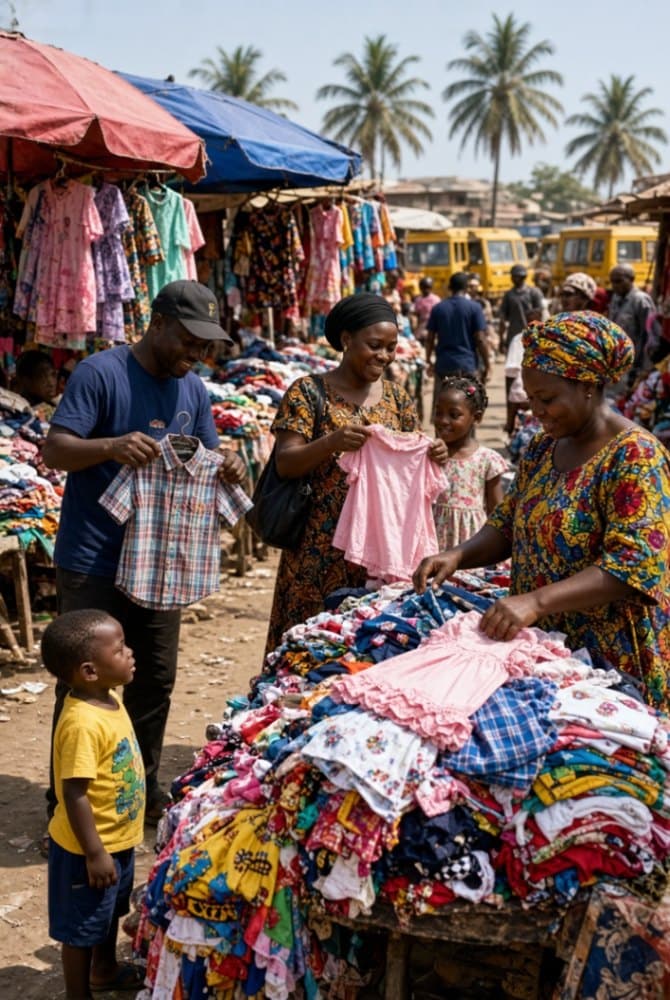
In many Nigerian cities, secondhand baby clothes are popular because they combine variety with affordability. You may find bodysuits, rompers, baby gowns, socks, caps, and jackets in bundles or individual listings, often at lower price points than new retail items.
Typical secondhand baby-clothing prices vary widely by location, brand, condition, and seller. A simple cotton onesie may be listed around ₦500 to ₦2,500, while branded or near-new pieces can cost more. Bundles often offer better value when the items are clean, sorted, and in usable condition.
A good wash starts with a good purchase. Before payment or pickup, a quick check reduces the chance of bringing home damaged or unclean items.
Use this checklist:
This approach supports safer peer-to-peer trading and reduces avoidable disappointment.
If you are listing or buying secondhand baby clothes, a clean description, clear photos, and a simple condition note make the process easier for both sides. A platform like Threddo can help keep the exchange direct and simple, especially when you want to sort items by clothing type, gender, age, or donation status.
Here is a simple real-world example. If you buy a secondhand baby romper with a faint storage smell and a small milk stain, first inspect the seams and label, then pre-soak it in warm water with mild detergent, wash it again with an extra rinse, and dry it completely in sunlight or strong airflow.
If the smell disappears and the fabric stays soft, it is likely ready for wear. If the odour remains or the stain spreads, the item may need a repeat wash or may be better kept out of the baby’s wardrobe.
Sanitizing secondhand baby clothes is mainly about careful inspection, gentle but thorough washing, extra rinsing, and complete drying. When you combine these steps, you reduce residue, odour, and moisture while keeping the fabric comfortable for a baby’s skin. This article is for educational purposes only and does not constitute professional advice. Always follow safe trading practices and use your own judgement.