T
Loading…
Loading…
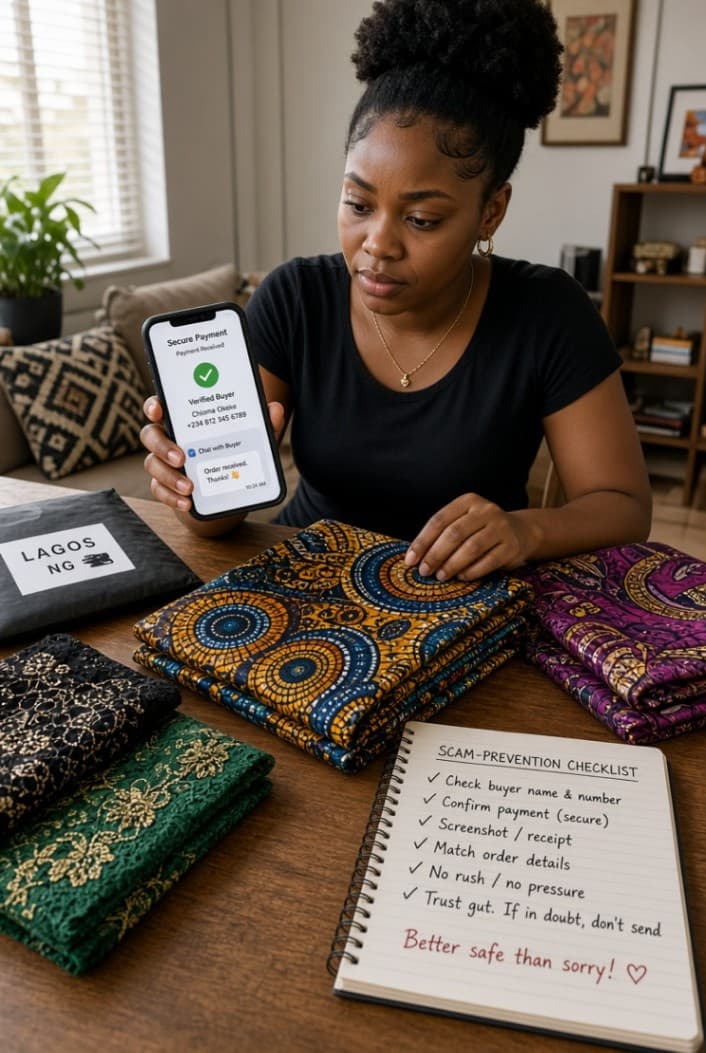
Selling clothes online in Nigeria can work smoothly when you slow the process down, verify the buyer, and keep every step traceable. The safest approach is to treat every deal as a transaction that needs evidence, not trust alone, because fake alerts, pressure tactics, and identity tricks are common in online marketplaces.
Scammers often target clothing sellers because fashion items are easy to post, easy to copy, and easy to resell. In Nigeria, common patterns include fake payment alerts, rushed collection requests, payment-switching tactics, and requests to move conversations off-platform before any verification is done. The FCCPC also requires businesses to give accurate information, provide full disclosure of material facts, and clearly inform buyers when goods are second-hand or reconditioned.
The practical lesson is simple: the more a deal depends on speed, silence, or blind trust, the higher the risk. A careful seller works with proof, clear terms, and a record of what was agreed.
People searching for this topic usually phrase it in practical ways such as:
These phrases reflect the real intent behind the topic: people want simple fraud-prevention steps they can use immediately when selling fashion items online in Nigeria.
| Scam pattern | What it looks like | Safer response |
|---|---|---|
| Fake payment alert | Buyer sends a screenshot or SMS saying “transfer successful” | Confirm in your banking app before releasing the item. |
| Rushed pickup | Buyer pressures you to hand over the item immediately | Pause, verify, and keep communication documented. |
| Account switch | Buyer changes payment details at the last minute | Reconfirm the name and account before accepting anything. |
Have something to give away or sell?
Post your first listing — it only takes a couple of minutes.
| Off-platform move | Buyer asks to continue privately or through unfamiliar channels | Keep the transaction inside the platform or chat trail. |
| Too-good-to-be-true offer | Buyer offers an unusually high price with urgency | Compare with normal market value and slow the process down. |
A safer listing starts before the first message arrives. Clear photos, exact item descriptions, and honest condition notes reduce disputes and make it harder for scammers to manipulate the sale later. The FCCPC’s consumer-rights guidance also says sellers must provide full disclosure of material facts and accurate information, especially for used goods.
A clear listing helps honest buyers decide faster and gives you a stronger record if a dispute happens later.
When someone contacts you, ask a few simple verification questions before accepting any promise. A real buyer usually responds consistently, while a scammer often becomes vague, impatient, or contradictory. Online safety guides for Nigeria repeatedly point to urgency, unusual payment requests, and unverifiable identities as warning signs.
If the buyer refuses basic verification but still wants the item quickly, that is a strong signal to pause.
For sellers, the biggest mistake is releasing the item before funds are actually visible in the bank app. Payment screenshots are easy to fake, and SMS alerts alone are not enough evidence because they can be forwarded, edited, or delayed. A cleared transfer should be verified inside your banking app or another official account view before handover.
The FCCPC says consumers should keep transaction records and proof, and it also notes that written records should be provided where practicable. That record matters if a transaction later becomes disputed.
| Red flag | Why it matters | Practical response |
|---|---|---|
| “Please send to a different account.” | This can signal account takeovers or confusion tactics | Recheck the name, account, and agreed details. |
| “My colleague will pay.” | This can break the traceability of the deal | Keep payment tied to the buyer you verified. |
| “I’ll send proof now.” | Proof is not the same as cleared funds | Wait for confirmation inside your bank app. |
| “I’m in a hurry.” | Urgency reduces careful checking | Slow the transaction and confirm every detail. |
| “I’ll add extra money later.” | This often leads to confusion and disputes | Accept only the exact agreed amount before release. |
The chat itself is part of your protection. Keep the price, item condition, delivery point, and timing in one thread so there is a clear record if anything goes wrong. If the buyer tries to move to a phone call for key details, summarize the final agreement back in writing afterward.
Here is a simple message structure that works well:
That kind of written trail helps with accountability and makes it easier to identify inconsistent behavior.
Imagine you are selling a thrifted denim jacket for ₦8,000. A buyer says, “I’ll transfer now, I’m on my way,” then sends a screenshot before the money appears in your banking app. In that case, the safer response is to wait until the transfer reflects, then confirm the amount, and only hand over the jacket after the funds are visible.
If the buyer gets annoyed, keeps changing the account name, or insists you release the item first, the conversation is no longer normal. That pattern is more useful than the price itself for judging risk.
These ranges vary by brand, condition, city, and season, but they help you spot suspicious offers.
| Item type | Common secondhand range in Nigeria |
|---|---|
| Basic T-shirt | ₦1,500–₦5,000 |
| Jeans | ₦4,000–₦15,000 |
| Dresses | ₦3,500–₦20,000 |
| Sneakers | ₦8,000–₦35,000 |
| Handbags | ₦5,000–₦30,000 |
| Jewellery | ₦2,000–₦25,000 |
If a buyer pushes for a deal far outside the usual range, it is worth checking the item’s condition, demand, and authenticity before continuing. Very low or very high offers can both be used to distract sellers from proper verification.
Nigeria’s FCCPC says consumers are entitled to accurate information, full disclosure of prices and material facts, and protection against misleading or deceptive conduct. It also states that complaints should first be raised with the service provider, and then escalated to FCCPC if needed, with proof of transaction and the party’s correct address where possible.
For online selling, that means saving receipts, chat screenshots, payment evidence, and the buyer’s identifying details. If a dispute escalates, those records are more useful than memory alone.
Use this routine every time you sell clothes online:
This routine is basic, but it reduces the most common online fraud risks in Nigeria’s peer-to-peer market.
If you list on Threddo, the safest habit is still the same: keep the conversation clear, verify payment inside your own banking app, and use the platform’s safety guidance and listing structure to make the transaction easier to track. You can review the safety basics at Threddo Safety and post items through Threddo Listings.
Selling clothes online in Nigeria becomes much safer when you verify buyers, avoid rushed deals, and confirm payments in your bank app before release. Clear listings, written agreements, and transaction records also align with FCCPC consumer-rights principles for accurate disclosure and fair dealing. This article is for educational purposes only and does not constitute professional advice. Always follow safe trading practices and use your own judgement.