T
Loading…
Loading…
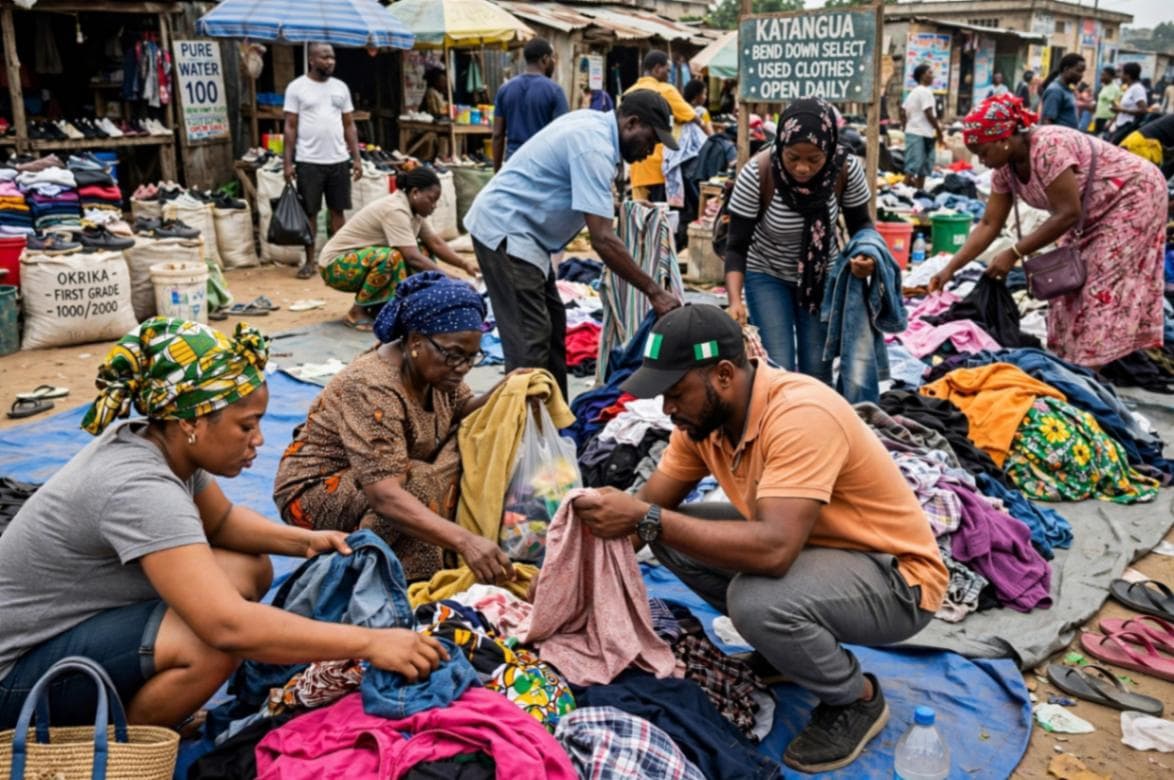
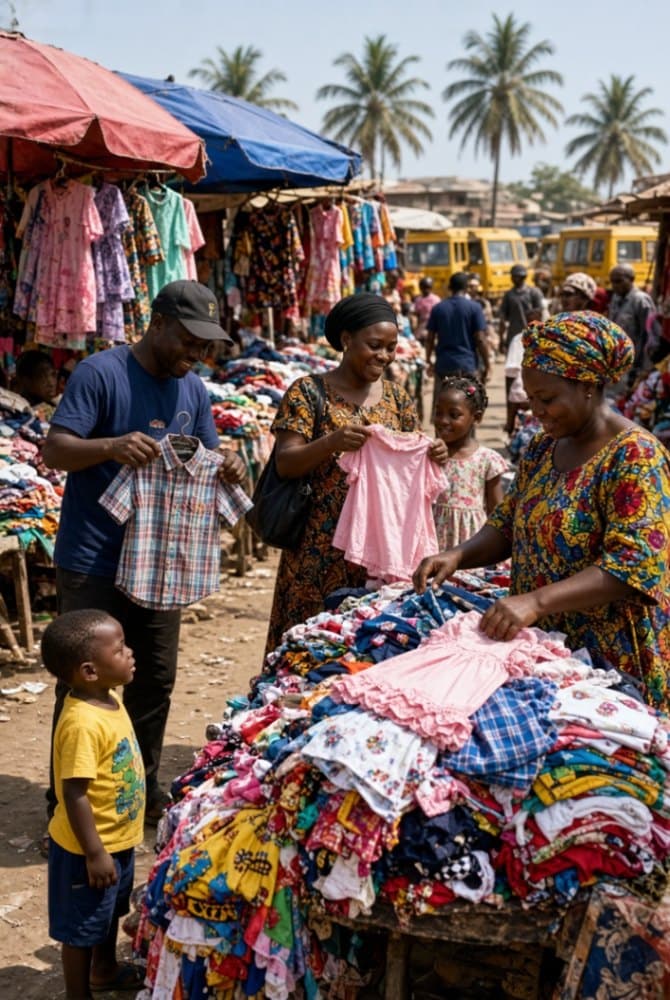
If you’ve heard “bend-down-select” in Lagos markets or on WhatsApp thrift groups, it refers to the hands-on way Nigerians shop secondhand clothes: piles on the floor, you bend down, pick, and try items discreetly. The phrase captures both the physical act of selecting from heaps and the culture of affordable, stylish thrifting known locally as Okrika.
“Bend-down-select” is a colloquial term for the open-air thrift shopping experience common in markets like Yaba, Katangua (Abule Egba), and Aswani (Isolo). Traders display bales of secondhand clothing in large heaps on the ground; buyers literally bend down to sift through, select, and sometimes try items in a corner—hence the name.
In Yoruba-speaking circles, a related expression is “Bọ́ sí korò” (move to the corner), shortened to “boskoro,” describing the discreet trying-on process. Together, these terms reflect a practical, low-cost retail model where price, variety, and speed drive the experience.
Prices vary by grade, brand, and market, but these ranges are common in Lagos thrift hubs:
| Item | Budget Range (₦) | Mid Range (₦) | Premium/Branded (₦) |
|---|---|---|---|
| T‑shirts | 500 – 1,500 | 1,500 – 3,000 | 3,000 – 6,000 |
| Jeans | 1,500 – 3,500 | 3,500 – 6,000 | 6,000 – 12,000 |
| Dresses (women) | 1,000 – 3,000 | 3,000 – 7,000 | 7,000 – 15,000 |
| Shoes (sneakers) | 2,000 – 5,000 | 5,000 – 10,000 | 10,000 – 25,000 |
| Bags/Purses | 1,000 – 4,000 | 4,000 – 10,000 | 10,000 – 30,000 |
Note: Ranges reflect typical 2024–2026 market observations in Lagos; prices shift with supply, season, and bale quality.
The deeper origin of Nigeria’s thrift vocabulary ties to Okrika, a coastal town in Rivers State. In the mid-20th century, ships from Europe docked at Okrika with consignments of secondhand clothing, which were then distributed across the country. Over time, “Okrika” became the nationwide label for secondhand garments, while “bend-down-select” described the on-ground shopping method in busy markets.
Have something to give away or sell?
Post your first listing — it only takes a couple of minutes.
Historical accounts note that Igbo traders pioneered large-scale imports of used clothing from Europe and North America as far back as the 1940s–1950s, with early consignments landing in Port Harcourt and flowing through Okrika. This port-town link explains why a place name became the generic term for a product category—a pattern common in Nigerian commerce.
The experience is tactile and fast-paced. Traders open bales, spread items on mats or the floor, and call out prices. Buyers sort by size, colour, and brand, often negotiating on the spot. Because items aren’t tagged like in boutiques, inspection and fitting happen quickly—sometimes in a semi-private corner (“boskoro”).
This approach reduces the risk of buying damaged or counterfeit goods and aligns with consumer protection principles under Nigeria’s Federal Competition and Consumer Protection Act, which expects sellers to address unsafe or defective goods and notify buyers of hazards.
Thrift shopping rewards a sharp eye. Counterfeit designer bags and shoes circulate in busy markets, so focus on telltale signs: uneven stitching, flimsy hardware, misspelled brand tags, and poor-quality linings. For shoes, inspect sole bonding, insole branding, and box labels; for bags, check zipper pulls, leather grain, and interior tags.
If a deal feels suspicious, walk away. Under FCCPC guidelines, traders and importers should withdraw unsafe goods and notify the public of risks; while enforcement varies, your judgement is the first line of defence.
Buying secondhand extends garment life, reduces waste, and lowers the demand for new production—core ideas in a circular economy. For students and young professionals in Lagos and other cities, thrifting offers style variety at lower cost while keeping textiles out of landfills.
Nigeria’s thrift culture has evolved from a necessity-driven market to a style-forward, community-led ecosystem. Platforms that enable peer-to-peer giving and selling (like local WhatsApp groups or dedicated marketplaces) can further reduce waste by connecting donors, sellers, and buyers directly.
| Myth | Fact |
|---|---|
| “Okrika is only for low-income earners.” | Thrifting is now mainstream among students, creatives, and middle-class shoppers seeking value and unique pieces. |
| “All secondhand clothes are dirty or unsafe.” | With proper inspection and washing, many items are clean and durable; some buyers prefer certain imported grades for quality. |
| “Bend-down-select means no quality control.” | Markets vary; experienced buyers use checklists and trader relationships to source higher-grade bales and branded items. |
| “It’s a new trend.” | The trade dates back to the 1940s–1950s via Okrika port; the slang is old, even if the style angle is newer. |
Lagos remains the epicentre, but similar markets exist nationwide. In Lagos, key hubs include:
Beyond Lagos, major cities like Kano (Kurmi), Onitsha (Main Market), and Port Harcourt have active secondhand clothing sections, often using the same “bend-down” selection style.
These habits help you build a reliable, affordable wardrobe without overspending—especially useful for students in Lagos balancing style and budgets.
As thrifting moves online, the “bend-down” act becomes digital: scrolling through photos, asking for close-ups, and arranging meetups. The same safety principles apply—inspect, verify, and meet in public spaces. Community platforms that emphasise safety and direct contact can make peer-to-peer trading smoother; for example, Threddo’s safety guide outlines practical steps for secure meetups and honest listings.
“Bend-down-select” is more than slang—it’s a window into Nigeria’s resilient thrift economy, from Okrika’s port history to today’s bustling Lagos markets and online groups. With the right checks and a bit of market savvy, you can shop stylishly, safely, and sustainably.
This article is for educational purposes only and does not constitute professional advice. Always follow safe trading practices and use your own judgement.
Last Updated: September 2026