T
Loading…
Loading…
Last Updated: September 2026
Buying a secondhand wig can be a smart way to save money, but the first wear should only happen after a proper clean, sanitize, and check of the cap, strands, and lace. A used wig often carries product build-up, sweat, dust, odor, and tangles, so the cleaning method depends on whether it is synthetic or human hair. FCCPC guidance also treats second-hand goods as a category that must be clearly disclosed, which is useful when you are assessing condition before wearing or reselling.
Before any washing, I inspect the wig label, fiber type, cap structure, and smell. Synthetic wigs react badly to hot water and rough handling, while human hair wigs tolerate a wider range of care products, but still need gentle treatment. If the wig came from a WhatsApp listing or direct seller chat, consumer rights on accurate description, disclosure of second-hand goods, and written transaction records help you compare what was advertised with what you received.
A wig that smells strongly of mildew, has broken lace, or sheds heavily at the cap may need careful repair before washing, because water can make some problems worse.
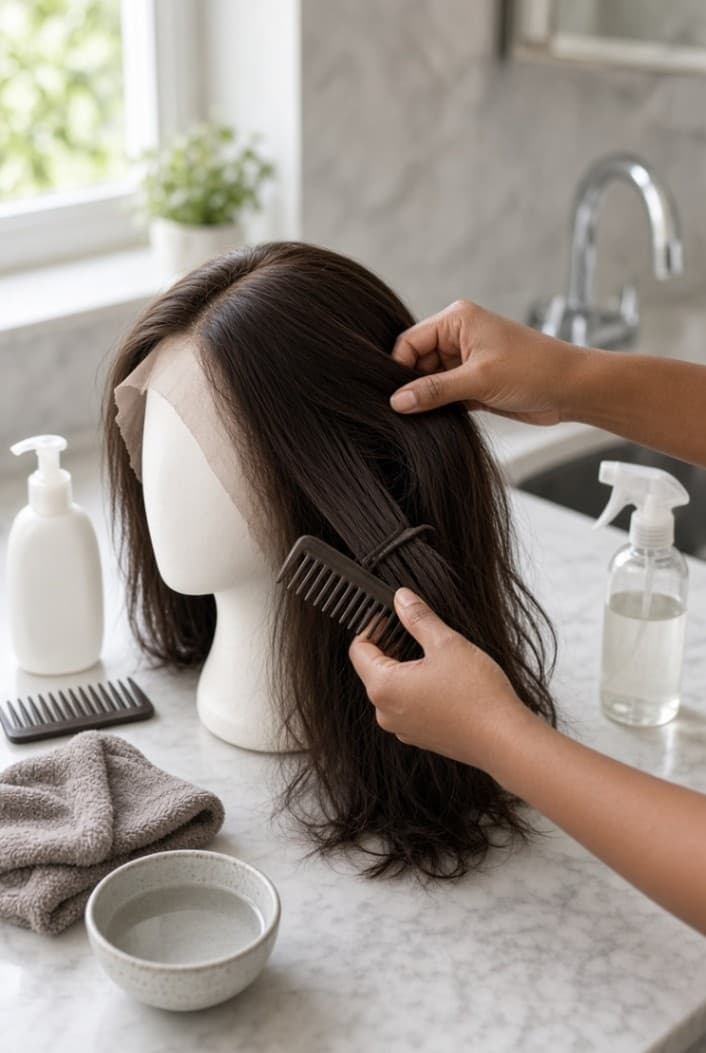
The safest routine starts with detangling, then a gentle soak, then air-drying. Wig-care guides from hair specialists consistently recommend working from the ends upward, using cool or lukewarm water, and avoiding twisting or wringing, because that stretches fibers and creates more tangles. For synthetic wigs, hot water can deform the fibers, while human hair wigs still benefit from mild shampoo and careful handling.
Synthetic wigs are usually the most common thrift find because they are cheaper and easier to replace. Start by combing the wig when it is dry, using a wide-tooth comb and moving from the ends to the top. Wash in cool water with a small amount of wig shampoo, then rinse gently and blot with a towel instead of squeezing.
Have something to give away or sell?
Post your first listing — it only takes a couple of minutes.
Human hair wigs can take regular shampoo and conditioner, but gentle technique still matters. Detangle first, then wash in lukewarm water with mild shampoo, keeping the motions soft and downward. After rinsing, apply a light conditioner to the mid-lengths and ends if needed, then rinse again so the wig does not feel heavy or greasy.
This method follows the same basic principle used by wig-care guides: gentle motion, low heat, and no twisting.
The products you use can change how long a secondhand wig stays neat. Wig shampoo is the most convenient option, but mild sulfate-free shampoo can also work for human hair wigs. Heavy oils, very hot water, harsh bleach, and strong detergents are poor choices because they can strip shine, loosen knots, or damage the cap.
| Use | Avoid |
|---|---|
| Wig shampoo or mild shampoo | Bleach or strong detergent |
| Cool or lukewarm water | Hot water |
| Wide-tooth comb | Small fine-tooth brush |
| Microfiber towel | Rough rubbing |
| Wig stand or hanger | Drying on a radiator or direct high heat |
For lace-front wigs, pay extra attention to adhesive residue around the hairline. That area often traps sweat and makeup, so gentle spot cleaning helps the lace look fresher without pulling it apart.
Air-drying is the safest finish for most secondhand wigs. After blotting, set the wig on a stand so the cap keeps its shape and the hair falls naturally. Direct sun can sometimes speed drying, but strong heat can also dry out human hair wigs and weaken synthetic fibers, so shade and airflow are safer choices.
If the wig dries slightly flat, use your fingers or a wide-tooth comb to reshape it only after it is mostly dry. Brushing a damp wig can lead to shedding and frizz, especially if it is synthetic.
A used wig may need more than shampoo if it came with odor, sweat, or heavy product buildup. Mild sanitizing is about removing residue, not making the wig “sterile,” because over-treatment can damage the fibers. For hygiene, focus on a clean basin, fresh water, a clean towel, and thorough rinsing, because leftover cleanser can irritate the scalp and make the wig feel sticky.
If the wig still smells musty after washing and drying, repeat a gentle wash rather than using harsh chemicals. Repeated light cleaning is usually safer than one aggressive wash.
When buying a secondhand wig in Nigeria, the transaction is not only about style; it is also about consumer information and privacy. FCCPC states that businesses must disclose used or reconditioned goods, and the FCCPA also supports clear product descriptions, price disclosure, and examination of goods where possible. The Nigeria Data Protection Regulation says personal data should be collected for specific, legitimate purposes, with consent that is informed and freely given, which matters when sellers request your phone number, address, or images in direct chat.
The FCCPA also supports the right to information in plain language, disclosure of used goods, and a transaction record when requested, which helps reduce disputes around condition and price.
Secondhand wig prices in Nigeria vary by length, fiber type, lace quality, and condition. A basic synthetic used wig may cost far less than a human hair unit, while closure or frontal styles usually cost more because of lace work and styling. The figures below are practical market ranges for everyday browsing, not fixed prices.
| Wig type | Common used-price range |
|---|---|
| Short synthetic wig | ₦3,000–₦10,000 |
| Long synthetic wig | ₦8,000–₦25,000 |
| Human hair blend | ₦15,000–₦45,000 |
| Used human hair wig | ₦40,000–₦150,000+ |
| Frontal wig | ₦25,000–₦120,000+ |
Condition changes value quickly. A wig with clean lace, low shedding, and no odor is usually easier to wear immediately after washing than one that needs repairs.
These mistakes shorten the lifespan of both synthetic and human hair wigs and can make a thrift purchase look older than it is. A slow, gentle routine usually preserves the style better than a quick deep-clean.
If I buy a used shoulder-length synthetic wig in Lagos, I first shake out dust, comb it dry, and soak it in cool water with wig shampoo. I then rinse it, blot it with a towel, and leave it on a stand overnight in a ventilated room. The next day, I check the lace, trim loose threads if needed, and only wear it after the cap is completely dry.
That routine is simple, low-cost, and realistic for everyday use. It also fits the way many thrift buyers manage repeat wear without overprocessing the wig.
If you are listing a secondhand wig or checking a seller’s description, a WhatsApp-first marketplace like Threddo can help keep communication direct and simple, while your own safety checks stay the same.
A secondhand wig can be wearable, hygienic, and long-lasting when you clean it with the right water temperature, gentle shampoo, careful detangling, and full air-drying. Nigeria’s consumer rules on second-hand goods and data privacy also support clearer listings, honest descriptions, and safer direct-chat trading. This article is for educational purposes only and does not constitute professional advice. Always follow safe trading practices and use your own judgement.