T
Loading…
Loading…
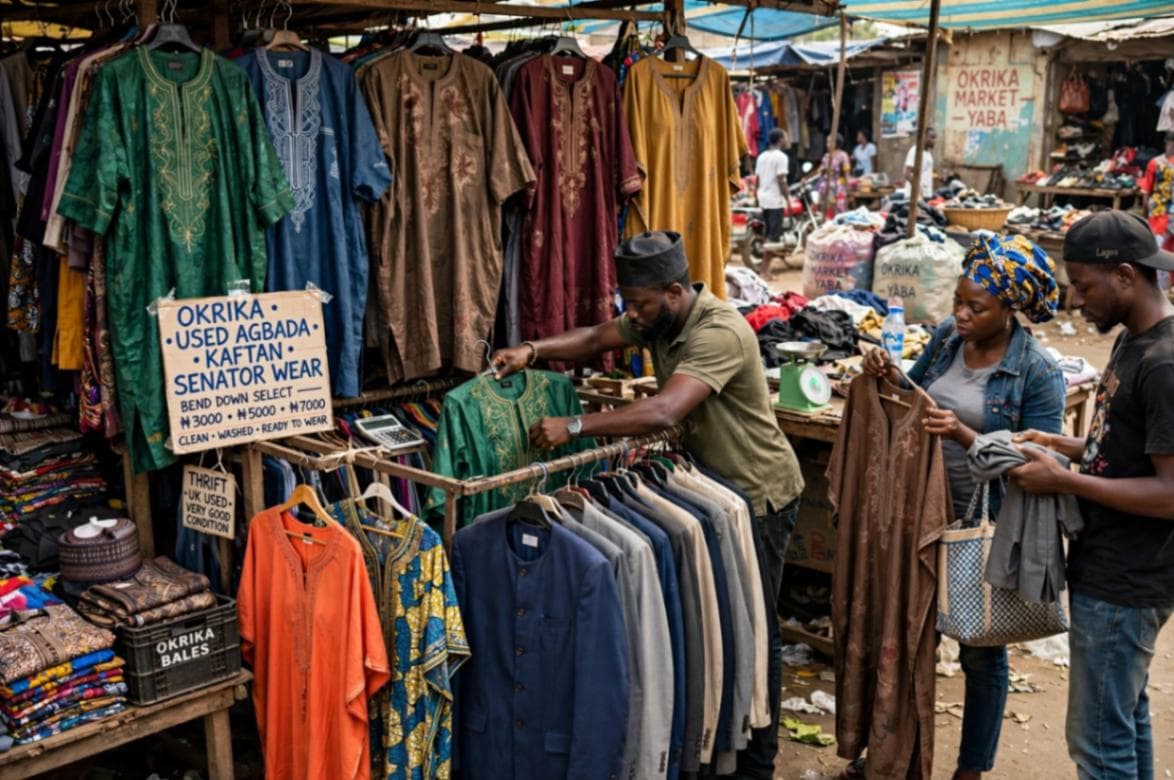
Buying secondhand agbada and native wear can save you money while giving quality garments a second life, but it pays to know what to check before you pay. From fabric authenticity and stitching to fair price ranges and safe trading habits, this guide breaks down what works in practice for Nigerian buyers who want value without surprises.
Last Updated: September 2026
Secondhand clothing is a major part of how many Nigerians dress, especially for occasions where native attire is expected. Affordability is a big driver: pre-owned garments often cost far less than new bespoke or retail options, and the savings can be significant when you factor in fabric and tailoring.
There is also a style angle. Some buyers look for unique embroidery, older “owner-made” pieces with heavier threadwork, or specific cuts that are harder to find ready-made today. For others, thrifting native wear is part of a broader interest in reusing clothes and reducing waste, even if that is not the main reason for the purchase.
At the same time, the market has risks: mislabelled fabrics, hidden stains, weak seams, and unfair pricing are common complaints. Knowing what to inspect and how to negotiate helps you avoid ending up with a piece that looks good in photos but disappoints in person.
Understanding the categories helps you search smarter and compare like with like.
Sellers often use informal grades. Treat these as starting points, not guarantees:
Have something to give away or sell?
Post your first listing — it only takes a couple of minutes.
Common labels you will see:
Fabric claims are where many buyers get misled, so verification matters more than the label.
Fabric determines comfort, durability, and how well the garment will take alterations.
Use a combination of look, touch, and simple tests when meeting a seller.
Native wear lives or dies by its construction. A beautiful pattern on poor stitching will not last.
Before buying, think about how you will wear it:
If you plan to alter, factor in tailor fees (often ₦2,000–₦8,000 depending on complexity and location) when judging whether a piece is worth the price.
Prices vary by city, condition, fabric, and embroidery. The ranges below reflect typical market observations for secondhand pieces in major Nigerian cities like Lagos, Abuja, and Port Harcourt. Use them as reference points, not fixed rules.
| Condition / Fabric Type | Typical Price Range (₦) | Notes |
|---|---|---|
| Grade 1, good cotton or brocade | ₦8,000 – ₦25,000 | Heavy embroidery and known brands or bespoke pieces can be higher. |
| Grade 2, mixed fabrics | ₦5,000 – ₦15,000 | Common range for decent event-ready sets. |
| Grade 3, well-used, simple designs | ₦2,000 – ₦7,000 | Suitable for casual wear or as backup outfits. |
| Condition / Fabric Type | Typical Price Range (₦) | Notes |
|---|---|---|
| Grade 1, quality cotton or blends | ₦6,000 – ₦20,000 | Embroidered collars and cuffs push prices up. |
| Grade 2, lightly used | ₦4,000 – ₦12,000 | Good for regular church or event wear. |
| Grade 3, faded or simple styles | ₦2,000 – ₦6,000 | Often sold in bundles or market lots. |
| Item | Typical Price Range (₦) | Notes |
|---|---|---|
| Agbada top only (no trousers/cap) | ₦3,000 – ₦12,000 | Depends heavily on embroidery and fabric. |
| Trousers only (matching or plain) | ₦1,500 – ₦6,000 | Plain native trousers are cheaper. |
| Caps / Fila (embroidered) | ₦800 – ₦4,000 | Coral bead caps can be higher. |
Prices in thrift markets and online peer-to-peer listings can be lower, but always weigh condition and authenticity against the discount.
Different channels offer different trade-offs in price, variety, and risk.
Pros: You can touch, try on, and negotiate face-to-face.
Cons: Time-consuming; quality varies stall to stall; limited return options.
WhatsApp-based and social media marketplaces have grown fast, with sellers posting photos and videos of secondhand agbada and native sets. Buyers chat directly with sellers, agree on prices, and arrange pickup or delivery.
Pros: Wider selection; ability to compare multiple sellers from home; often clearer photos.
Cons: Risk of misleading images; no guaranteed returns; need to vet sellers carefully.
Platforms like Threddo.com.ng focus on this peer-to-peer model for Nigeria, allowing people to list secondhand clothing, including native wear, with direct WhatsApp contact and no platform fees. For buyers, the key is applying the same fabric and stitching checks you would use in a physical market, even when dealing online.
Some vendors curate secondhand native wear, steam/press items, and present them as “thrift boutique” pieces. Prices can be higher than open markets, but the selection is often cleaner and better photographed.
Pros: Better presentation; some pre-screening of items.
Cons: Higher markups; still limited recourse if something is wrong.
Secondhand clothing transactions in Nigeria are largely informal, but basic consumer protection principles still apply.
The Federal Competition and Consumer Protection Commission (FCCPC) handles complaints about unfair trade practices, misleading descriptions, and defective goods in Nigeria. While secondhand clothing sales are often person-to-person, the principle that goods should match their description is still relevant. If a seller advertises “pure cotton” but the item is clearly synthetic and they refuse any resolution, you can log a complaint with FCCPC via their official channels.
For online transactions, follow platform-specific safety guides. For example, Threddo’s safety principles emphasise verifying sellers, meeting in public, and never sharing sensitive financial details beyond what is needed for payment.
Buying secondhand does not mean compromising on cleanliness. Proper care extends the life of the garment and keeps it fresh for events.
If you have sensitive skin or allergies, consider an extra rinse cycle and avoid heavily scented detergents on garments that will sit close to your skin for long periods.
Use this as a quick on-the-spot guide when evaluating a piece.
If more than two or three items on this list raise concerns, it may be wiser to walk away and keep looking.
You see an agbada set advertised as “pure cotton, heavy embroidery, Grade 1” for ₦4,000 in a busy market. On inspection, the fabric feels very slick, the embroidery back is messy, and there is a faint bleach smell near the collar.
Practical move: Treat this as a low-grade, possibly blended or synthetic piece. Either negotiate the price down significantly to reflect Grade 3 condition or skip it, especially if you need it for an important event.
An Instagram thrift vendor posts a crisp video of a navy brocade agbada set, priced at ₦18,000. They claim “barely worn, no defects.” You request close-up videos of the inside seams and underarm areas, and they send them promptly. The stitching looks solid, and they agree to a meet-up in a public place for inspection before payment.
Practical move: This shows a seller comfortable with transparency. Proceed, but still do the full checklist when you meet.
You find a Grade 2 cotton agbada for ₦10,000, but the sleeves are slightly tight and the length is a bit short for your height. Your tailor confirms there is enough seam allowance to open the sleeves but says the length cannot be extended.
Practical move: If the shortened length will still work for your usual shoes and style, the piece can be worth it; if not, no amount of discount fixes the fundamental fit issue.
Nigeria is one of the major importers of secondhand clothing in Africa, with far more imports than exports in textile trade flows. While this has complex effects on local industries, reusing garments like agbada and native wear keeps them in circulation longer and reduces the demand for new production.
Every secondhand agbada that finds a new owner is one less new outfit that needs fabric, dye, and energy to produce. For buyers, this does not have to be the main reason to thrift, but it is a real side benefit of choosing pre-owned over brand-new for events and regular wear.
If you prefer a WhatsApp-first, fee-free way to browse or list secondhand clothing in Nigeria, platforms like Threddo.com.ng let people post native wear, agbada sets, and accessories with direct seller contact and no in-app payments. The same safety and inspection rules apply: treat online listings as you would market stalls, and always verify before paying.
Secondhand agbada and native wear can be a smart, affordable way to build a versatile wardrobe for events, church, and everyday occasions in Nigeria, provided you know how to check fabric, stitching, and fair pricing. Use the checklists and price ranges here as practical guides, and prioritise sellers who allow thorough inspection and transparent communication. This article is for educational purposes only and does not constitute professional advice. Always follow safe trading practices and use your own judgement.