T
Loading…
Loading…
Last Updated: September 2026
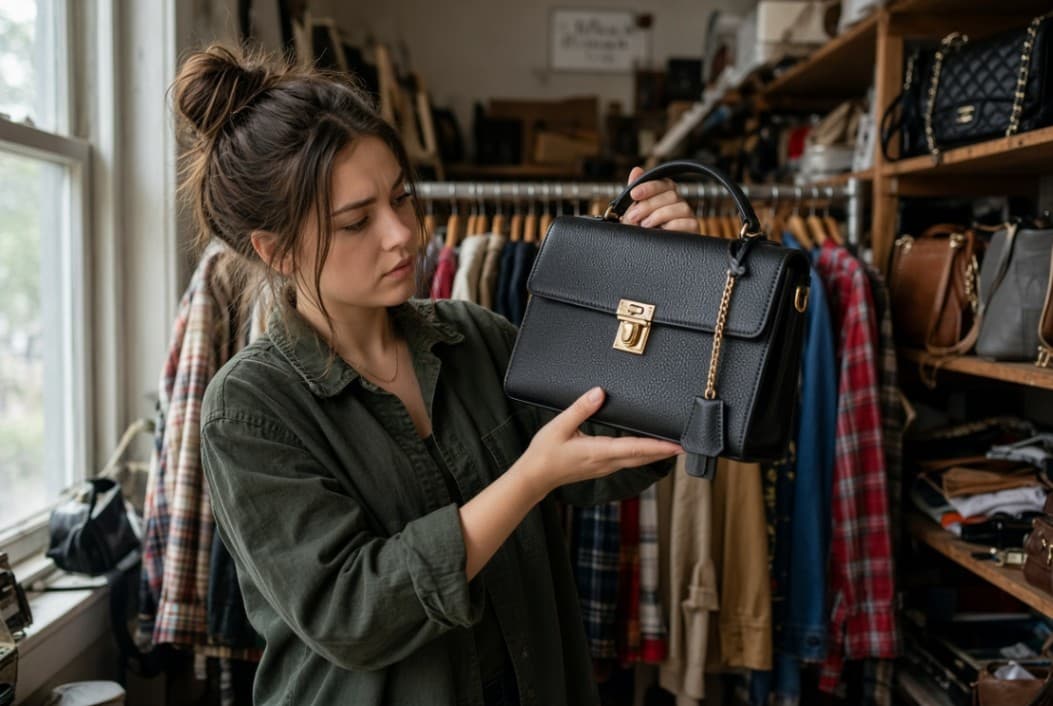
Thrift shopping can help you find luxury-looking bags at lower prices, but it also opens the door to replicas, misleading listings, and rushed purchases. The safest approach is to check the bag as a whole: material, stitching, hardware, logo quality, interior finishing, and seller consistency, not just one detail like a serial code.
Counterfeit goods remain a serious problem in Nigeria, and regulators continue to warn the public about fake and substandard products in the market. The Federal Competition and Consumer Protection Act also prohibits misleading or deceptive representations in the marketing of goods, which matters when a seller presents a fake bag as authentic. For thrift shopping, that means your safest protection is careful inspection before payment and clear proof from the seller.
A fake bag often gives itself away through a pattern of small mistakes rather than one obvious flaw. When I inspect a pre-loved designer bag, I start with these broad checks:
Authentic bags usually show care in the way materials are cut, stitched, and finished. Canvas patterns align more cleanly, leather edges are smoother, and the overall shape holds in a more balanced way. Fake bags often cut corners here, so you may see thick edge paint, rough glazing, visible glue, or thread that looks inconsistent from seam to seam.
A strong chemical or overly synthetic smell is another common warning sign, especially when the listing claims premium leather. This is not a final proof on its own, but it becomes important when combined with weak stitching and low-quality hardware.
Have something to give away or sell?
Post your first listing — it only takes a couple of minutes.
Many buyers focus too much on serial numbers or date codes, but those details alone do not prove authenticity. Some brands use date codes, some use serial-style identifiers, and some newer products use chips or digital authentication systems instead of stamped codes. A code can be correct and the bag can still be fake, so the code should be treated as one clue among many.
| Checkpoint | What looks suspicious | Why it matters |
|---|---|---|
| Interior code | Missing, badly stamped, or mismatched to the claimed era | Fakes often use wrong formats or sloppy stamping. |
| Brand label | Spelling errors, uneven spacing, or poor embossing | Authentic branding is usually clean and precise. |
| Made-in tag | Country information that clashes with the code or product story | Inconsistency is a common counterfeit signal. |
| Font quality | Blurry, thick, or uneven lettering | Replicas often miss the exact font weight and spacing. |
For some brands, official authentication tools exist. Gucci, for example, provides an authenticity tag experience through its app for supported products. That said, a buyer still needs physical inspection because counterfeit items can imitate codes and tags.
Hardware is one of the quickest ways to judge bag quality. Authentic pieces usually feel solid, with crisp engraving and smooth movement, while replicas often feel light, scratchy, or cheaply plated. Zippers should run smoothly without catching, and branded pulls, where applicable, should have clean lettering and proper finishing.
A simple rule helps here: if the bag looks expensive but the hardware feels tinny, treat that as a warning sign. Check the underside of clasps, zipper pulls, strap rings, and corner protectors, because counterfeits often finish the visible side better than the hidden side.
When a bag is priced far below the usual resale range, that is not automatically proof of a fake, but it does call for extra caution. A genuine pre-loved designer bag can be discounted because of wear, missing accessories, older season design, or urgency to sell, yet the listing should still make sense against the bag’s condition. If the price looks unreal and the photos are weak, the risk rises quickly.
| Listing pattern | What it can mean | Example |
|---|---|---|
| Very low price with blurry photos | Higher risk of counterfeit or hidden damage | A “designer” tote listed at ₦18,000 with only one photo and no interior shots. |
| Mid-range price with clear photos | Better chance of a genuine pre-loved item, though still not guaranteed | A worn crossbody at ₦85,000 with stitching, logo, and hardware photos. |
| High price with no proof | Possible overpricing or confidence trick | A bag priced like retail but with no receipt, no close-ups, and no return discussion. |
For thrift shopping, the smartest move is to compare the listing with several authentic reference photos from the brand or a trusted authentication source. If details across the listing do not tell the same story, pause and inspect more closely.
Use this checklist before you pay for any pre-owned designer bag:
Imagine you find a “designer” shoulder bag listed for ₦45,000. The outside photos look clean, but the seller refuses to show the zipper pull and the inside label, the hardware looks pale instead of solid, and the stitching near the handle is uneven. Even without knowing the exact brand, those details together point to a higher counterfeit risk.
Now compare that with another bag listed at ₦120,000. The seller shares sharp close-ups of the logo, seams, lining, corners, and hardware, and the bag’s code format matches the claimed production era. That still does not guarantee authenticity, but it gives you a much stronger basis for judgement than a listing with vague photos and no details.
Consumer protection rules in Nigeria prohibit misleading product descriptions and deceptive marketing, so buyers are not wrong to ask for accurate photos and information. In practice, safe thrift trading means keeping communication on record, checking the item before completing the exchange where possible, and avoiding rushed deals that pressure you to pay first. NAFDAC also continues to warn Nigerians about fake goods and encourages reporting suspected violations through official channels rather than relying only on social media.
On Threddo, these same habits fit naturally with direct buyer-seller contact, so it helps to request clear photos, keep chats, and read the platform’s safety guidance before posting or buying through the marketplace.
Knowing how to spot fake designer bags when thrift shopping comes down to pattern recognition: clean stitching, convincing hardware, consistent labels, believable pricing, and a seller who can answer questions clearly. In Nigeria, the safest approach is to combine visual inspection with consumer-protection awareness and careful seller verification. This article is for educational purposes only and does not constitute professional advice. Always follow safe trading practices and use your own judgement.