T
Loading…
Loading…
Last Updated: September 2026
Buying secondhand Nike or Jordan sneakers can save money, but it also requires careful checking because counterfeit sneakers are common in online and offline resale markets. In Nigeria, where thrift buying is popular and peer-to-peer trading is fast, I treat every listing as something to verify before money changes hands. This guide shows you how I check photos, labels, stitching, materials, and seller behaviour so I can spot fake Nike shoes and reduce avoidable mistakes.
Before I even look at the shoe itself, I start with the listing quality, because many fake pairs give themselves away through poor presentation. Clear photos, close-ups of the tongue label, insole, outsole, heel, size tag, and box can reveal more than a long seller caption. If the listing uses only one blurry image or hides the inside label, I pause and ask for more photos.
In Nigeria’s resale space, speed matters, but caution matters more. The Consumer Protection Council, now operating through the Federal Competition and Consumer Protection Commission framework, supports fair dealing and consumer protection principles, which makes accurate product information and truthful trading important in marketplace transactions. That is why I look for consistency between the listing, the shoe, and the seller’s answers.
| Checkpoint | What I look for | Common red flag |
|---|---|---|
| Box and label | Style code, size, colourway, and brand name line up | Missing or mismatched box details |
| Stitching | Clean, even stitching throughout | Loose threads, uneven lines, glue stains |
| Logo placement | Swoosh, Jumpman, and wordmarks sit correctly | Off-centre or misshaped logos |
| Materials | Leather, mesh, suede, or foam feel consistent | Very cheap-feeling material |
| Insole and tongue tags | Printing is sharp and aligned | Faded print or wrong font |
| Outsole | Pattern is crisp and symmetrical | Sloppy moulding or asymmetry |
| Seller behaviour | Answers clearly and shares close-up photos |
Have something to give away or sell?
Post your first listing — it only takes a couple of minutes.
| Dodges questions or pressures fast payment |
This table is not a single-test verdict; I use several signals together. A pair can pass one check and still fail others, especially when the counterfeit is a higher-quality replica.
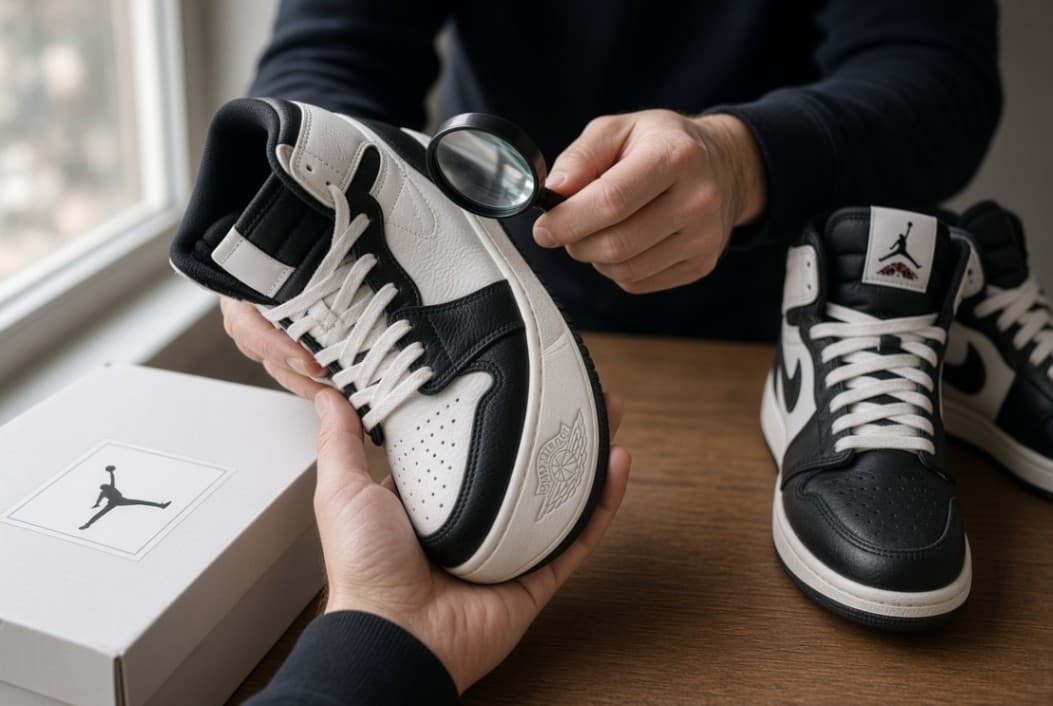
Nike and Jordan sneakers often have model-specific details, so I compare the pair against known product photos from official or trusted retail sources. For Nike, I check the swoosh shape, heel tab, tongue tag, and the font on the size label. For Jordan models, I pay close attention to the Jumpman silhouette, wing logo, tongue patch, and the shape of the toe box.
A useful habit is to search the exact model name and colourway before buying. If the seller claims a “Jordan 1 Chicago” but the panel arrangement, stitching, or logo positions do not match common retail images, that mismatch is a warning sign. The same applies to Nike Air Force 1, Dunk, Air Max, and React models, where small label and shape differences can matter.
One of the simplest checks is the product code on the size tag, box label, and sometimes the hang tag. I compare the style code, size, colour name, and factory information across all available parts of the item. If the box says one model and the shoe tag suggests another, I treat that as a serious inconsistency.
Counterfeit sellers sometimes reuse real-looking codes from other listings, so I do not rely on the code alone. I use it together with build quality, logos, and materials. A real code on a badly made shoe is still a warning sign.
Authentic sneakers usually have a cleaner finish than counterfeits, especially around the toe box, heel, midsole, and tongue. I look for even stitching, neat bonding, and no obvious glue overflow. Fake pairs often show messy edges, misaligned panels, or thread ends sticking out where the finish should be smooth.
That said, factory variation exists, so I avoid overreacting to one tiny imperfection. What matters is the pattern of quality across the whole shoe. If several parts look rushed, I become more cautious.
A genuine pair usually has materials that feel balanced and structured, not overly flimsy or strangely heavy. I test how the shoe flexes in hand, how the leather or synthetic upper responds, and whether the foam feels consistent from left to right. Counterfeits often use cheaper materials that crease too easily, feel stiff in the wrong places, or look dull under natural light.
When I compare a secondhand pair to a known authentic model, I also notice smell and texture. Strong chemical odour, unusually shiny surfaces, or a plasticky feel can be additional warning signs. None of these alone proves a fake, but they help build the picture.
Shape is one of the easiest things to miss in online photos. I check whether both shoes look symmetrical, whether the heel counter stands correctly, and whether the toe box matches the model’s usual profile. Some fake Nike and Jordan pairs have a broader front, a flatter heel, or a boxier body than the real version.
This matters because many buyers focus only on the logo. In practice, the overall silhouette often tells a clearer story than the brand mark itself. A good counterfeit may copy the logo, but it may still get the shape wrong.
I use simple questions to test consistency, not to trap the seller. These questions help reveal whether the person actually has the item in hand.
A seller who answers calmly and provides extra photos is easier to assess. A seller who becomes defensive, changes the story, or refuses basic close-ups gives me a reason to slow down.
Price alone does not prove anything, because many secondhand sellers price differently based on wear, size demand, and urgency. Still, a very cheap “rare” Jordan or heavily hyped Nike model often deserves extra scrutiny.
If I see a pair of Air Force 1s listed in Lagos for a very low price and the seller posts only one dark image, I ask for daylight photos, box label shots, and side profiles before I continue. If the seller shares a video but the swoosh shape looks uneven and the size tag font appears too thin, I treat it as a possible fake.
For a Jordan 1 listing, I compare the collar shape, ankle stitching, tongue patch, and outsole details against the exact colourway. If the shoe resembles the model but the panel cuts do not line up, I do not rely on the brand name alone. This layered check is more reliable than any single “real or fake” trick.
| Step | What I do |
|---|---|
| 1. Study the model | Compare the exact colourway and shape before messaging |
| 2. Request close-ups | Ask for tongue, heel, outsole, size tag, and box label photos |
| 3. Inspect consistency | Match the code, colour, stitching, and logos |
| 4. Ask for a video | Request a short clip in daylight, rotating both shoes |
| 5. Compare seller info | Check if the story, photos, and item details align |
| 6. Meet safely | Choose a public place if meeting in person |
| 7. Verify before paying | Inspect the pair before sending money where possible |
This checklist fits WhatsApp buying because it is simple and fast. It also works when you are comparing multiple listings in a city like Lagos, where sneaker demand is high and resale turnover is quick.
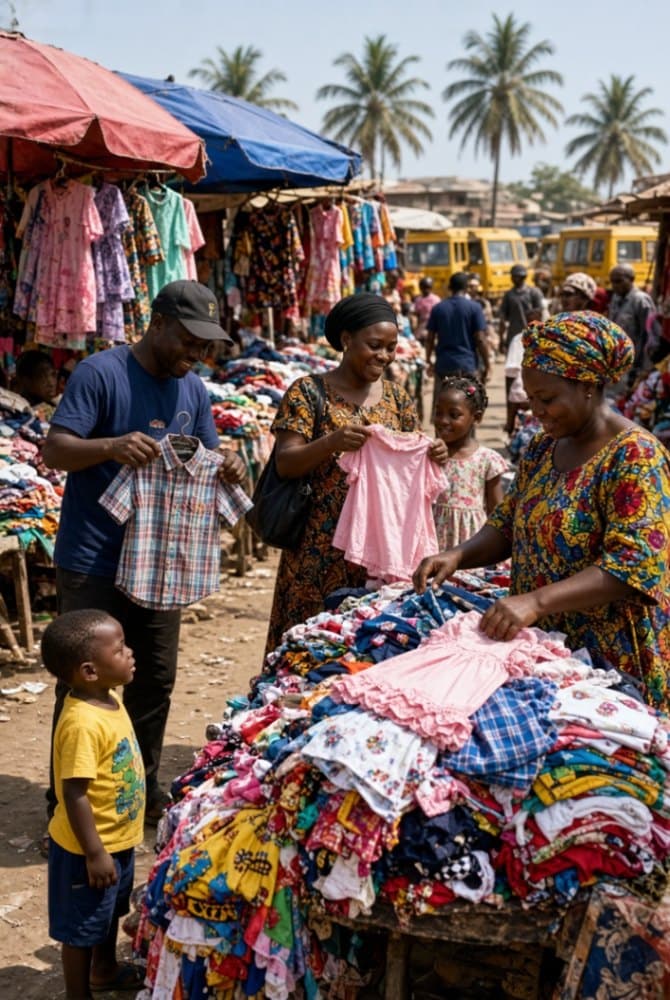
Secondhand fashion can extend product life, reduce waste, and keep good items in circulation, but only when the item is genuine, accurately described, and usable. Research on second-hand clothing trade in Africa shows how large and complex the market is, with Nigeria among the major importers in the region. That scale creates opportunity, but it also creates space for misleading listings, which is why authentication habits matter.
Sustainable fashion is not only about buying used items. It also includes buying carefully, reducing returns, and avoiding waste from low-quality counterfeits that fail quickly. That practical mindset helps both your budget and the wider circular economy.
For buyers and sellers using Threddo, I find it easier to share clear photos, exact model details, and condition notes from the start, then use the platform’s safety guidance when arranging a handover or donation.
Authenticating Nike and Jordan sneakers before buying secondhand comes down to pattern recognition: match the code, inspect the stitching, check the shape, compare the logos, and verify the seller’s story. When several small details point in the same direction, I get a much clearer picture than any single “fake check” could provide. This article is for educational purposes only and does not constitute professional advice. Always follow safe trading practices and use your own judgement.