T
Loading…
Loading…
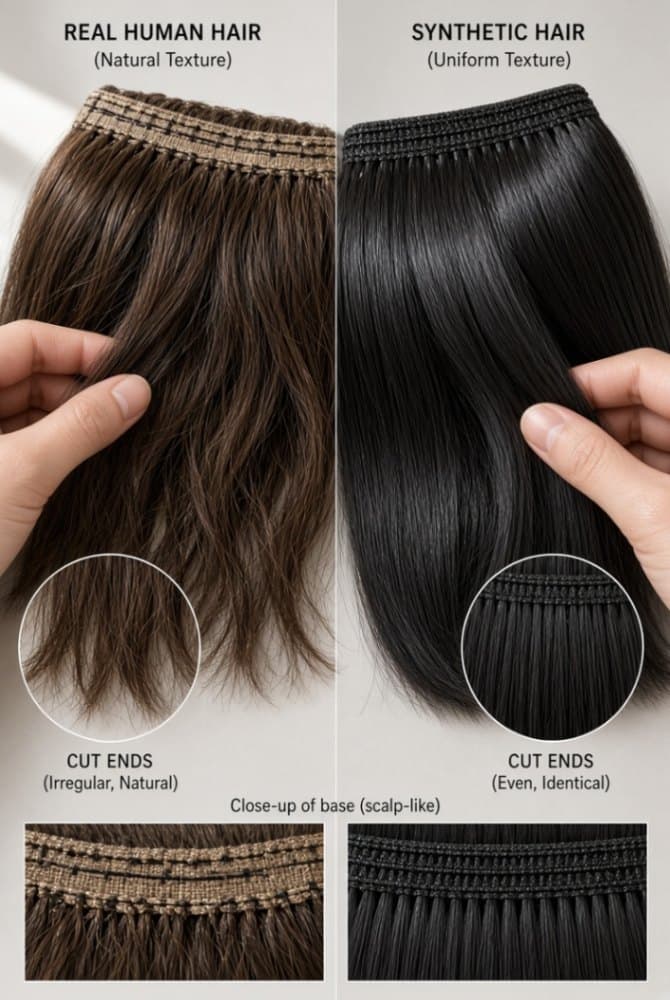
If you’ve ever bought ‘human hair’ in Lagos, Abuja, or Port Harcourt only to discover it melts under heat or tangles like plastic, you’re not alone. Fake or blended hair is a common issue in Nigeria’s secondhand and online hair market. The good news: with a few quick checks, you can tell real human hair from synthetic before you part with your money.
This guide walks you through reliable at-home tests, red flags in listings, realistic price ranges in …, and safe trading practices for platforms like WhatsApp markets and community hubs.
Last updated: September 2026
Human hair is often treated like an asset: it can be washed, dyed, heat-styled, and reused for months when cared for properly. Synthetic hair, made from plastic-based fibers like kanekalon or toyokalon, usually can’t handle heat and has a shorter lifespan.
In Nigeria, mislabeling is widespread. Some sellers advertise ‘100% human hair’ while mixing in synthetic fibers or selling heavily processed hair with stripped cuticles. On peer-to-peer platforms and WhatsApp groups, the risk increases because there’s no formal quality control. That’s why knowing how to test before buying protects your budget and your edges.
| Feature | Real Human Hair | Synthetic Hair |
|---|---|---|
| Feel (root to tip) | Smooth one way, slight resistance the other (cuticles) | Uniformly slick or plasticky both ways |
| Shine | Natural sheen, not blinding | Overly shiny, ‘Barbie-doll’ gloss |
| Burn test | Burns slowly, smells like burnt hair/feathers, turns to ash | Melts into hard bead, smells like burning plastic/rubber |
| Heat test (flat iron) | Styles normally, no melting | Frizzes, melts, or sticks to tool |
| Water test | Absorbs water, sinks slowly | Often floats, resists soaking |
| Tangling | Tangles moderately, like natural hair |
Have something to give away or sell?
Post your first listing — it only takes a couple of minutes.
| Tangles excessively or feels stiff |
| Dye/bleach | Takes colour (with care) | Won’t absorb dye; may melt or dry out |
| Price (typical, Nigeria) | …15,000–…80,000+ per bundle/wig depending on quality | …3,000–…15,000 for most synthetic sets |
Price ranges are indicative based on common market listings and may vary by city, vendor, and hair type.
You don’t need a lab to verify hair. These five tests are widely recommended by stylists and experienced buyers in Nigeria.
How to do it safely:
What to expect:
Safety note: Do this outdoors or near an open window. Keep water or a fire extinguisher nearby. Never burn hair indoors or near children.
Run your fingers along a strand from root to tip, then back from tip to root.
High-quality human hair should also feel soft with natural variation in strand thickness, not uniformly perfect like plastic.
Use a low-to-medium heat setting on a hidden section.
This test is especially useful for ‘bone straight’ or ‘virgin’ claims, where sellers may pass off heat-friendly synthetic as human hair.
Drop a few strands into a bowl of water and watch for 10–20 seconds.
After washing, human hair should dry with a natural texture, while synthetic may feel stiff, crunchy, or overly shiny.
Apply a small amount of semi-permanent dye or lightener to a hidden strand.
Use this test only if you plan to colour the hair and the seller allows sampling.
Certain patterns often signal fake or blended hair, especially in Nigeria’s informal markets and online groups.
Prices vary by city, vendor, and hair origin (e.g., Indian, Mongolian, local). These ranges reflect common secondhand and new listings as of 2026.
| Hair Type | Typical Price Range (…) | Notes |
|---|---|---|
| Synthetic bundles/weaves | …3,000–…12,000 | Often labeled ‘heat-resistant’ but still plastic-based |
| Blended (human + synthetic) | …8,000–…20,000 | May pass initial feel test but fails heat/burn tests |
| 100% human hair (non-remy/processed) | …15,000–…35,000 | Can be dyed/styled but may tangle or shed more |
| 100% remy/virgin human hair | …30,000–…80,000+ | Best for long-term wear, coloring, and heat styling |
| Secondhand human hair (good condition) | …10,000–…40,000 | Depends on length, texture, and prior use |
Always verify with tests before paying, regardless of price.
‘Bone straight’ hair is a popular style in Nigeria, but it’s frequently counterfeited with synthetic fibers that mimic the sleek look.
How to spot fake bone straight hair:
For ‘virgin’ claims, ask if the hair has been chemically processed. True virgin hair hasn’t been dyed, bleached, or permed, and should lift colour evenly if tested.
Buying secondhand hair can be smart and sustainable, but safety comes first. Consumer Protection Council advises buyers to verify product claims and keep records of transactions.
Before meeting or paying:
After purchase:
Choosing secondhand human hair extends the life of a valuable resource and reduces waste. When hair is reused instead of discarded, it supports a circular economy where items circulate longer within the community. Platforms that enable peer-to-peer trading, like local WhatsApp groups or dedicated marketplaces, play a key role in this shift.
If you’re selling gently used human hair, be transparent about its condition, origin, and any prior chemical treatments. Honest listings build trust and encourage more people to participate in sustainable fashion.
If you’re looking to buy or sell secondhand hair in Nigeria, platforms like Threddo.com.ng offer a free, WhatsApp-first space to list human hair, wigs, and accessories with direct buyer-seller contact. Threddo Safety Guide principles align with the verification steps above, encouraging testing and transparent descriptions before transactions.
You can browse the Hair category, filter by gender or donation status, and message sellers directly to arrange tests or meetups. Always follow safe trading practices and verify items before paying.
Spotting real human hair from synthetic doesn’t require special tools—just a few simple tests, attention to detail, and a willingness to walk away from suspicious deals. By using the burn, feel, heat, water, and dye tests, you can avoid fake hair and protect your budget.
This article is for educational purposes only and does not constitute professional advice. Always follow safe trading practices and use your own judgement.